Who owns the Tangail saree? Bangladesh gets chance to challenge West Bengal’s GI tag |

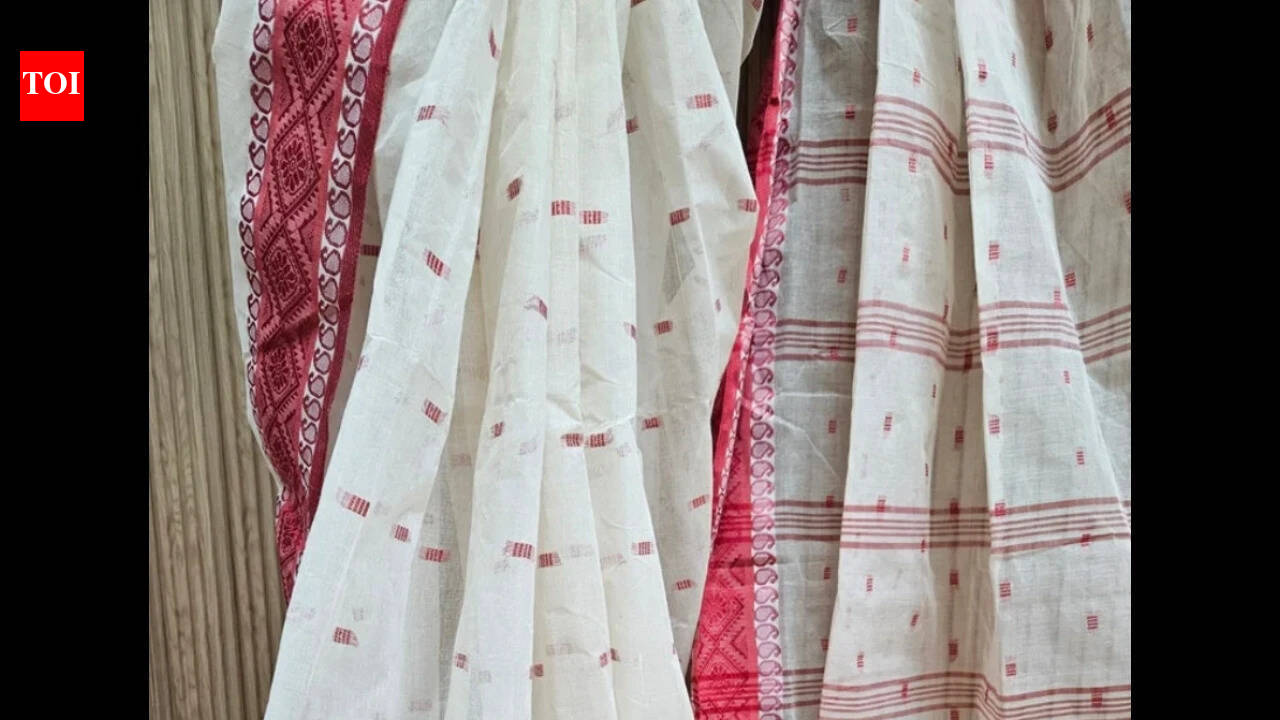
The battle over who can lay claim to the Tangail saree has entered a new phase. The Madras High Court has cleared the way for Bangladesh to move forward with its challenge to the Geographical Indication (GI) tag awarded to “Tangail Sarees of Bengal,” which has sparked a wide-ranging controversy over the heritage and weaving of the handloom.In an order dated November 20, 2026, Justice PB Balaji rejected a request from the West Bengal State Handloom Weavers Co-operative Society Limited – better known as Tantuja – to dismiss Bangladesh’s application before a full hearing.No ownership has been determined yet. All that is decided is whether Bangladesh’s request goes forward so that both sides can argue their case accordingly.The 26-page order was made public on Monday.
How did you start the line
Tangail sarees go back to at least the late 19th century. Highly valued for its distinctive hand-woven images and patterns, the weave has long been tied to the Tangail region, in present-day Bangladesh.The problem came to light after “Tangail Sarees of Bengal” received GI registration under India’s Geographical Indications of Goods (Registration and Protection) Act, 1999, with Tantuja listed as the registered owner.Bangladesh pushed back, arguing that the saree’s name, weaving pattern, and reputation belong to the Tangail region.In 2025, the Deputy Commissioner of Tangail moved the Madras High Court under Section 27 of the GI Act to seek cancellation or correction of the India tag. The application was made through a power of attorney issued by the High Commissioner of Bangladesh in New Delhi.Under Section 27, an existing GI registration can be canceled or modified if valid reasons are shown.
Why West Bengal regressed
Tantuja questioned Bangladesh’s right to bring the dispute to the Indian court in the first place. It contends that the Deputy Commissioner of Tangail is an officer of a foreign government and has no standing to proceed with the application in India.The co-operative society also argued that Bangladesh does not qualify as a “disadvantaged person” under the GI Act. Apart from that, it raised doubts about the power of the advocate and said that Bangladesh lost their chance by failing to object to the tag when it was initially offered.For those reasons, Tantuja wanted the petition to be set aside without digging into the underlying controversy.Justice Balaji was not ready to keep it there.
The court holds it
The judge noted that Bangladesh has its own Geographical Indications of Goods Act, 2013, which empowers government authorities to protect traditional goods and local communities.He also recognized the role of the Deputy Commissioner in looking after the economy and culture of Tangail weavers, producers and traders.According to Justice Balaji, Bangladesh’s claims deserve a real look rather than a premature exit before its side is heard.The court also rejected the claim that Bangladesh had not shown how the registration of Indians harmed its interests. Tangail sarees are sold in international markets – India included, and Bangladesh has the legal right to claim GI protection for its goods in India. If it ever tries to get a different GI tag there, the existing Indian registration may interfere.The bench also observed that where a saree takes its name from the Tangail district of Bangladesh, its reputation, quality, and characteristics can naturally be linked to that place.
Can Bangladesh go directly to the Supreme Court?
Another important point was whether Bangladesh could file directly with the Madras High Court or should it go to the Registrar of Land Registry first.Tantuja pointed to Rule 65 of the GI Rules, 2002, arguing that the application was before the Registrar.The court disagreed. Held that Section 27 of the GI Act empowers the High Court and the Registrar to hear rectification applications. Rules of procedure, Justice Balaji said, cannot take away the power given to the Supreme Court by Parliament.The court also dismissed objections to the power of attorney granted to successive High Commissioners of Bangladesh, concluding that from Md. Mustafizur Rahman to M. Riyaz Hamidullah did not invalidate the authorization. It also does not cross the initial bar to object to a later rectification request, the order said.
Big picture
Currently, no one has decided whether the Tangail saree is a GI product of Bangladesh or West Bengal. That phone is just down the road.Currently, Bangladesh is getting its chance to put forward the testimony about the history of weave, artistic traditions, and ties to Tangail. Beneath the legal arguments lies a very difficult question: when an old craft combines history and boundaries, who gets its place name? That is what the court will ultimately have to fix as the dispute progresses.
Source link