Scientists discover oxygen is formed without sunlight in the Pacific Ocean; The iron-rich nodules may be producing gas through a process that researchers have yet to explain

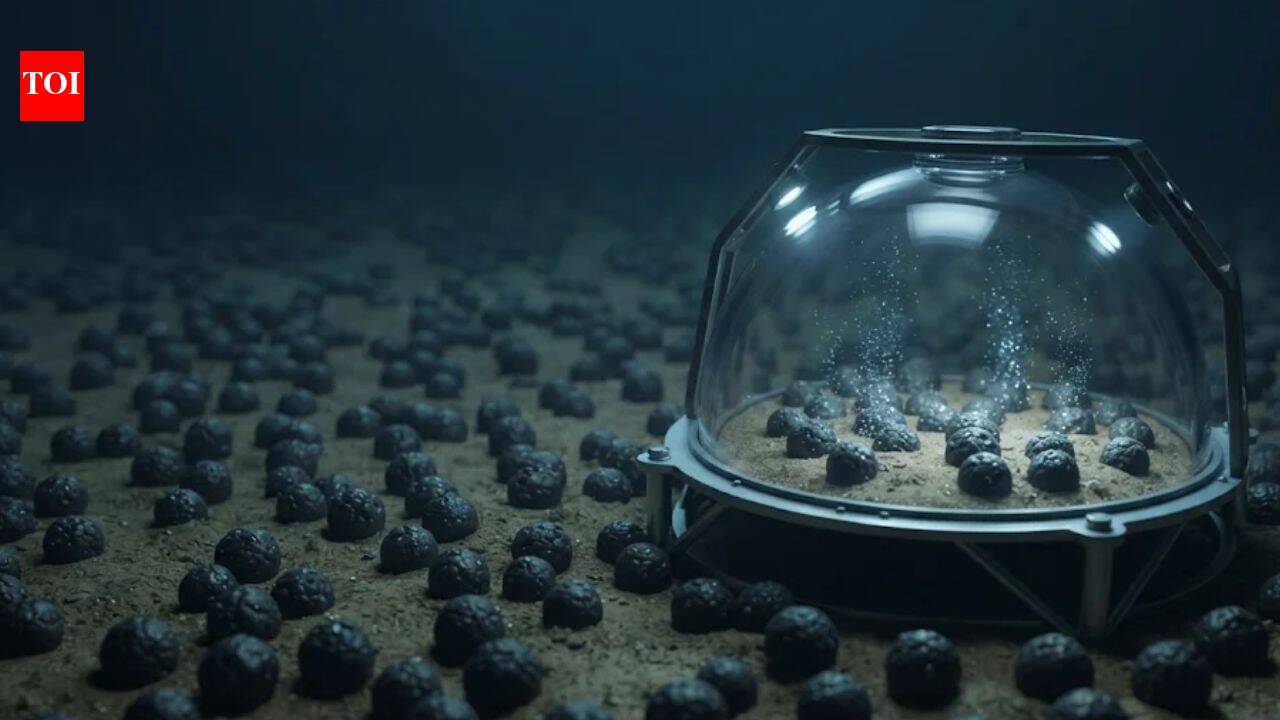
Researchers report oxygen production at the bottom of the Pacific Ocean, where oxygen levels are expected to decrease as marine life consumes the gas. The findings came from research conducted on a curved subsea surface covered in polymetallic nodules. The researchers used benthic chambers to measure oxygen changes and found that concentrations rose over two days instead of falling.In 25-chamber tests, oxygen levels rose from an initial average concentration of 185.2 micromoles per liter to peak levels of 201 to 819 micromoles per liter within 47 hours. According to a study published in Nature Geoscience, entitled ‘Evidence of dark oxygen production in the subsea zone’, researchers link this unexpected oxygen production to polymetallic nodules and propose that electrical currents in their environment can help split seawater into hydrogen and oxygen.
How researchers measure oxygen production in the Pacific Ocean
The researchers conducted tests at the Nauru Ocean Resources Inc. license area. (NORI)-D of the Clarion-Clipperton Zone in the Pacific Ocean. Polymetallic nodules cover wide areas of this sea. The team used independent inhabitants of the benthic chamber to measure changes in oxygen in closed sections of soil and seawater.In all 25 chamber incubations, oxygen saturation started at an average of 185.2 micromoles per liter. They later reached peak levels between 201 and 819 micromoles per liter over 47 hours. The resulting black oxygen production ranged from 1.7 to 18 millimeters of oxygen per square meter per day.
Revealed by laboratory experiments on oxygen production
The team investigated several possible explanations for the unexpected increase. Measurements have shown that oxygen production also occurs in closed laboratory incubations, including experiments containing only polymetallic nodules. Researchers have linked the process mainly to nodules and consider biological explanations unlikely to account for most of them. Experiments using mercury chloride, which poisons many biological processes, still record oxygen production.The team also explored the processes of radiation in plants and chemical compounds including manganese oxide. Their calculations showed that these methods could explain less than 0.5% of the oxygen produced. The findings indicated that the nodules themselves played a major role, although the exact process behind their production remained uncertain.
Electrical activity provides a possible explanation for deep-sea oxygen
The researchers measured the voltage at 153 points in the area of 12 nodules. These samples come from the NORI-D, UK1 and BGR license areas. Some measurements have recorded voltages as high as 0.95 volts. The authors noted that splitting seawater into hydrogen and oxygen required an input voltage of 1.23 volts, and an additional overpotential.They proposed that iron-rich layers within the nodules may create a potential difference that provides the energy to make seawater. In this process, water is separated, and oxygen is released. The team described this explanation as a hypothesis, not a proven method. The voltage reading varies greatly at different points.
The researchers want to continue researching the production of black oxygen
The study found that oxygen production was not. Its level varied between experiments, and the researchers observed that it decreased during certain incubation periods. They also found a relationship between productivity and the central area of nodules.The authors cautioned against using measurements to measure oxygen production throughout the ocean because the process may not continue over time. Its activity may also depend on the density and type of nodules, and the sediments covering their surfaces.According to the researchers, more work is needed to determine the timing and distribution of this program. Understanding it could help clarify the role of black oxygen in deep-sea habitats and the effects of deep-sea mining.
Source link