NATO Secretary-General Mark Rutte wants to reassure members of the alliance in eastern Europe after the arrival of three Russian missiles in Poland on Friday.
Transcript
SCOTT DETROW, HOST:
Russia’s entry into NATO territory is increasing. The Secretary-General of NATO, Mark Rutte, wants to reassure the members of the alliance in Eastern Europe after the arrival of three Russian missiles in Poland on Friday. Although no one was injured, Rutte was in Germany today, where he spoke of growing concern. And for the most part, we are now joined by Esme Nicholson in Berlin. Hey, Esme.
ESME NICHOLSON, STRICTLY: Hello, Scott.
DETROW: Cruise missiles hit Poland as Russia launched its biggest airstrike in Ukraine since the start of an all-out invasion. Ukraine then goes back over the weekend. So, first of all, we brought acceleration to that.
NICHOLSON: Well, as you say, the risk of spillover from the Ukraine war was great and clear over the weekend. It began Friday morning with what Polish authorities have now identified as three Russian cruise missiles striking a rural part of southeastern Poland, about 30 miles from the Ukrainian border. Now, as you say, there were no casualties, but the attack happened while European forces were carrying out military operations in the region. And Polish Prime Minister Donald Tusk calls this incident a “deliberate provocation” – that’s a quote.
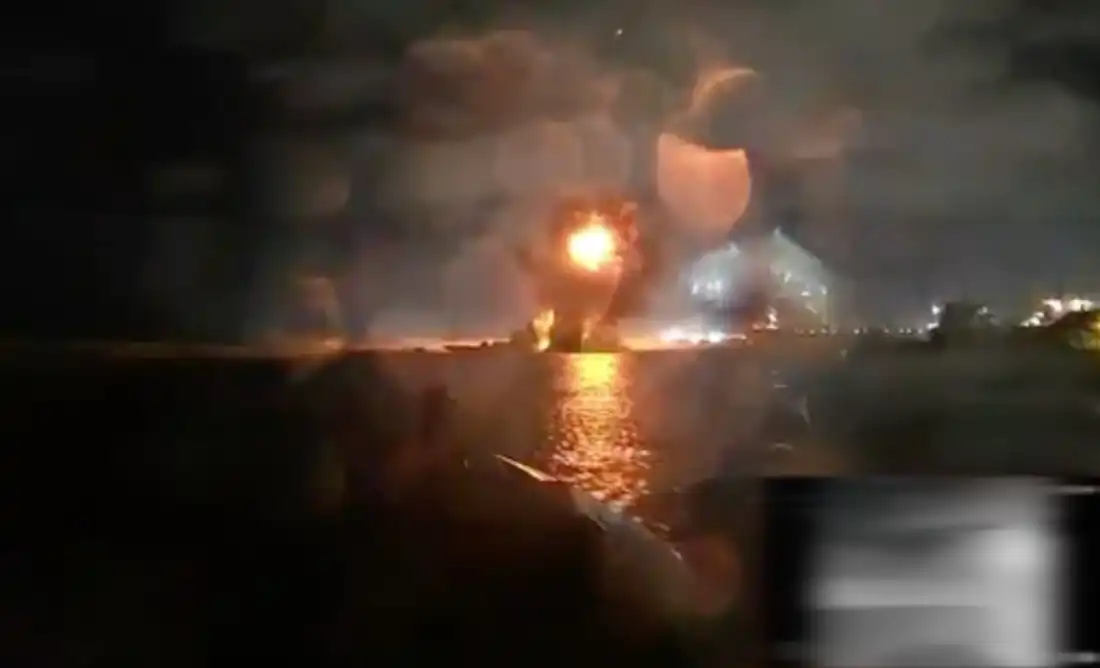
Then on Saturday, a Russian cargo ship in the Baltic Sea was hit by what was suspected to be a Ukrainian naval aircraft. And on Sunday, Ukraine took credit for sinking a Russian warship docked in the Libyan port of Benghazi, thousands of miles away. Libyan authorities have condemned the attack on their port, reflecting wider concerns that the conflict could spill over into Europe.
DUTROW: That’s right. And that’s a broad battlefield you’re talking about right there. The NATO chief was in Berlin today. Do you see this as the beginning of an increase beyond the borders of Ukraine?
NICHOLSON: Well, Rutte was cautious in his assessment over the weekend. He was in Berlin for the annual meeting, addressing parliamentarians from NATO countries. And while he acknowledged the dangers of a cruise missile attack, he was eager for Polish authorities to complete their investigation into whether or not they were intentional. Speaking to reporters, he said the coalition has, quote, “many options to answer” (ph) but he can’t go public about them. But he also asked for public support for Ukraine.
(SOUNDBITE OF NEWS CONFERENCE)
MARK RUTTE: As communities, we have to be strong and, most importantly, keep that support for Ukraine going. So in all cases in Europe, more support for Ukraine, not less support for Ukraine.
NICHOLSON: And Zelenskyy, who called the meeting in Berlin today, called for new talks with Russia, this time involving the Europeans.
DETROW: Let’s talk more about the Europeans. What do you think the chances are that they will end up taking part in ending this war?
NICHOLSON: Well, since last week’s coalition of the willing meeting here in Berlin, it looks like it might. German Chancellor Friedrich Merz and European leaders have warned the US and Russia about getting in over their heads. And today, Merz insisted that Europe is ready to sit at the table, something supported by the US special envoy for the peace mission Jared Kushner. But Merz also made it clear that no NATO member, he quoted, “is interested in the escalation of the Baltic Sea region,” which some saw as a plea to Ukraine to do its part to prevent the conflict from escalating.
He vowed that European leaders will discuss increasing defense on NATO’s eastern flank at an EU summit later this week. And he was right when he said that NATO made a mistake in 2008 when it decided not to make Ukraine a member, he said that if Ukraine had been a member of NATO, this war would have been avoided.
DETROW: That’s Esme Nicholson from Berlin. Thank you very much.
NICHOLSON: Thank you, Scott.
Copyright © 2026 NPR. All rights reserved. Visit our website terms of use and permissions pages at www.npr.org for more information.
Accuracy and availability of NPR program transcripts may vary. The text may be revised to correct errors or to include updates and audio. Audio can be edited after its first broadcast or publication. The authorized recording of NPR programming is the audio recording.
Please note that NPR’s platforms and products include certain programs produced by third parties; NPR cannot verify the texts of that content and some texts may be generated using automated or other tools.
Source link