In 1991, only 11 Hawaiian tree snails survived after being hunted by a predator introduced to combat garden pests; after 33 years of lab work, a lost species is finally returning to the wild

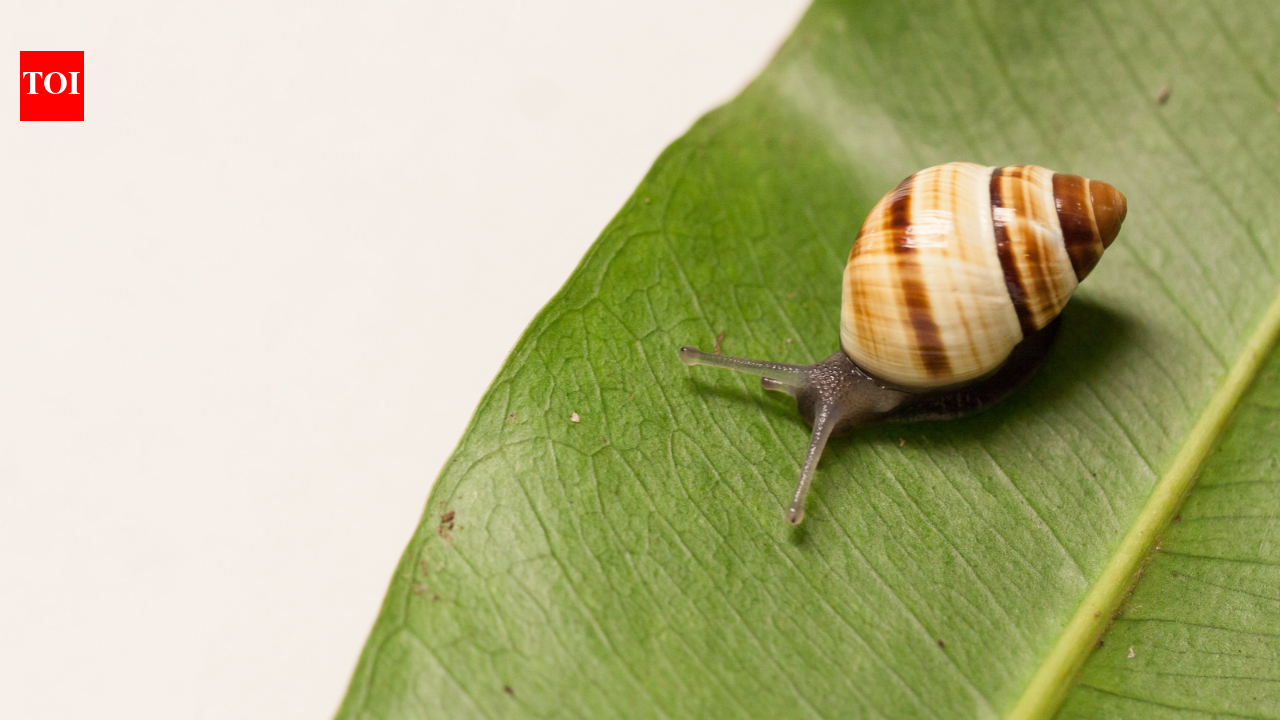
The nearlythree-quarters-of-an-inch-long creature took more than three decades of scientific effort to restore to the forests of Hawaii. The O’ahu tree snail, a species once considered extinct in the wild, is slowly getting another chance after conservationists rescued 11 known individuals in 1991 and spent years breeding in captivity.
The species, Achatinella fuscobasis, returned to its natural habitat in December 2024, but its return also highlights a troubling conservation flaw: a predator introduced to control a garden pest has become one of the biggest threats to Hawaii’s snails.The first group of these endangered snails was released on December 10, 2024, and placed in a special enclosure at the Honolulu Watershed Forest Reserve in the Ko’olau Mountains on O’ahu.
2026 US midterm election results
The reintroduction, announced by the Hawaii Department of Land and Natural Resources (DLNR) on December 18, marked the end of more than 33 years in captivity. It is also the result of nearly half a century of cooperation in conservation, research and efforts to prevent these species from becoming extinct forever.
How a pest control experiment turned into an environmental threat
The story of the decline of the snail is closely related to another species that was invented. In the 1930s, a large African land snail arrived in Hawaii, reportedly brought as a garden ornament. It soon became an agricultural and horticultural nuisance, prompting authorities to seek ways to control its population. In the 1950s, the carnivorous rosy wolf snail was introduced as a biological control agent. This predator was expected to help fight the giant African snail, but its food was not limited to its intended purpose.
It also hunted native Hawaiian snails, including colorful tree-dwelling species that evolved without predators.A 2021 research review published in the journal Biological Invasions examined the effects of introducing predatory snails and flatworms to control the giant African snail. The researchers found that the claimed benefits of these biological control efforts could not be confirmed, while predators contributed significantly to the decline and extinction of the islands’ native snails.The rosy wolf snail is very dangerous because it is a predator. It can find other snails and use a special feeding organ, called a proboscis, to get inside their shells and eat them. Dr. Michael Hadfield, emeritus professor of biology at the University of Hawaii at Mānoa, told the US Fish and Wildlife Service that researchers sometimes find healthy snails that have been reduced to empty shells after the arrival of predators.Rats and other invasive animals, including Jackson’s chameleons and the New Guinea flatworm, have also contributed to the destruction of native Hawaiian snails. The problem is not limited to one species or one village.
11 snails that have saved their species from extinction
By 1991, Achatinella fuscobasis had reached a critical point. The last 11 individuals from its only known wild habitat on O’ahu were rounded up by Hadfield and captured.
This decision was a desperate attempt to save a species that was impossible to survive in the forests that are constantly attacked by introduced predators.Hadfield and other researchers began testing methods of breeding snails in laboratory conditions. It wasn’t as simple as keeping them in containers and giving them leaves. The animals required carefully controlled temperature, humidity and light cycles. Hadfield described the first environmental chambers as similar to indoor refrigerators, except they allowed researchers to control day-night cycles and temperature.
As the snails began to work in the water, the rooms also needed sprinklers.Feeding myself was another challenge. Tree snails feed on fungi and algae that grow on the surface of leaves. The researchers first collected new branches from native ‘ōhi’a trees, going up into the mountains at least every other week. Eventually they found that cultivating the necessary fungi in petri dishes was very successful.
Then the snails could feed on the growth inside the laboratory enclosures.The hard work paid off. By December 2024, DLNR’s Snail Extinction Prevention Program had increased the number of captive individuals to over 1,000 individuals. The rescue went beyond keeping 11 animals alive until a population could be rebuilt that could survive outside the laboratory.
A fenced forest to prevent predators
Bringing the snails back to the forest required another major challenge: ensuring that the predators that caused their disappearance could not reach them again.
Conservationists have prepared a quarter-acre protected area in the Ko’olau Mountains, known as an exposed area. The residence took about five years to complete. Teams from the DLNR, the US Fish and Wildlife Service, the University of Hawaii and community volunteers worked to restore the area with native plants and remove invasive species.Volunteers and conservation staff spent nearly 600 hours searching for and removing predators from the enclosure.
The building was equipped with polyethylene walls five meters high, angled flanges, copper wire mesh and a hood barrier. These features were designed to deter rats, Jackson’s chameleons and the rosy wolf snail.The new habitat was intended to give the animals a chance to deal with environmental conditions as well, including trade winds, misty rain, cloud cover and sunlight, without exposing them to the same predators that had escaped captivity.
The first release took place on December 10, 2024. Another group was scheduled to be released in February 2025, according to the original DLNR announcement.
More than one kind of warning
Hawaiian tree snails, known collectively as kāhuli, are more than just tiny forest dwellers. Their colorful shells are featured in traditional Hawaiian poetry, hula, songs and lei making. They also play an important ecological role by feeding on fungi and algae that grow in vegetation and contributing to nutrient cycling in forests.The broader situation remains concerning. The US Fish and Wildlife Service notes that Hawaii once had more than 750 species of kāhuli, but at least 60% have disappeared within the last century. Forty-four species of Hawaiian snails are listed as endangered under the Endangered Species Act, and many more face serious threats.Even the successful return of Achatinella fuscobasis does not mean that these species are not endangered.
Its survival depends on maintaining predator-free habitats, monitoring the released population and continuing captive breeding. The animals are also low-reproductive, with adults producing only one to four young per year and reaching reproductive maturity at around five to seven years of age.For now, the tree snail’s comeback is an important conservation milestone, not a complete recovery. The 11 people rescued in 1991 helped prevent irreversible loss, but the conditions that drove them to extinction remain a warning about the consequences of introducing species into the natural environment without fully understanding their impact. More than three decades later, Hawaii has managed to give one of its lost jungle treasures another chance.
Whether it can establish a successful population beyond its protective walls remains a major test.