Psychology says reading to your child every day is a big start: Children read five picture books a day and hear about 1.4 million more words by age 5 than children who are never read to, an Ohio State study estimates.

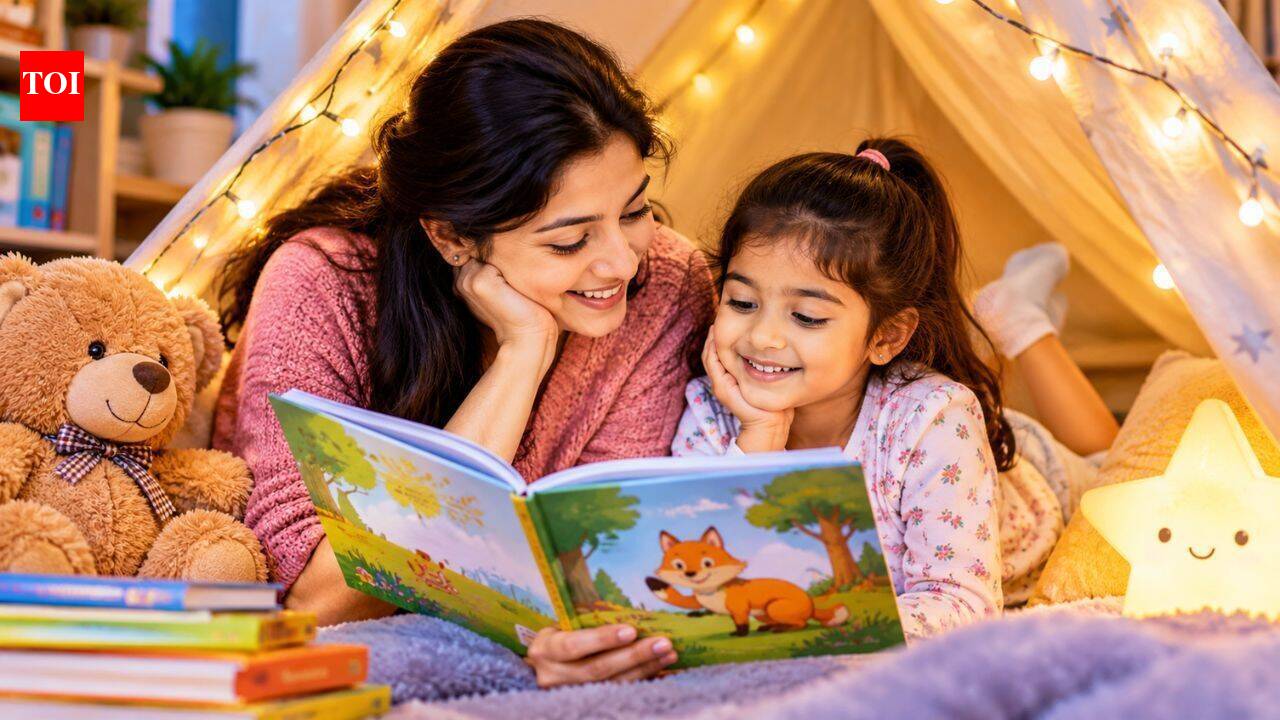
Bedtime may seem like a small part of a parent’s daily routine. But those few minutes spent flipping through colorful pages, explaining pictures and reading aloud can make a big difference in a child’s early learning.
Research from Ohio State University suggests that children whose parents read them five books a day may hear nearly 1.4 million more words by age five than children who never read them.The findings, described as the ‘million word gap’, highlight how something as accessible as sharing a story can impact a child’s exposure to language before they even enter the classroom. This research does not suggest that children must memorize every word or that parents need to complete a learning objective every day.
Rather, it draws attention to how regular exposure to literature can introduce young minds to vocabulary, ideas and expressions that may not come naturally in everyday conversation.
The numbers behind the one million word gap
Published in 2019 in the Journal of Developmental & Behavioral Paediatrics, a study titled ‘When Children Are Not Homeschooled: The Million Word Gap’ was conducted by Jessica AR Logan and colleagues. The researchers wanted to understand how much language children were exposed to in books during their first five years, depending on how often parents or caregivers read to them.To measure this, the group worked with the Columbus Metropolitan Library to find 100 of its most popular children’s books, including children’s board books and picture books for older children. They randomly selected 30 books from each section and counted the words. Their analysis found that board books have an average of 140 words, while picture books have about 228 words.Using these measurements, the researchers calculated how many words the children could hear at different reading frequencies between birth and their fifth birthday.
They assumed that children would read board books until they were three years old, followed by picture books during the next two years. The results revealed a striking difference. Children who were read five books a day could hear an estimated 1,483,300 words by age five.
Meanwhile, children who have never been read to are estimated to have heard only 4,662 words in books.
One letter a day can also make a difference
The research also offers encouraging news for parents who can’t fit more reading sessions into their daily schedules.
Children who were read one book a day were estimated to hear 296,660 words by their fifth birthday. That’s almost 290,000 more words than children who are never read to regularly. The researchers also calculated the exposure of the children who read the stories less often.Those who read books three to five times a week averaged 169,520 words when they were five years old. For children who were read to once or twice a week, the average was 63,570 words. Here’s how the numbers compare:– Never read 4,662 words– Once or twice a week: 63,570 words– Three to five times a week: 169,520 words– Once every day: 296,660 words– Five books a day: 1,483,300 wordsThese figures are estimates of words heard during shared reading, rather than the number of words children can understand or use independently.
Why children’s books offer something more
One interesting aspect of the study is that the books expose children to a language they may not encounter during normal conversations at home. Parents naturally use familiar words while discussing food, toys, daily activities and family routines. Children’s books, however, can present completely different subjects, settings and vocabulary. A story about penguins in Antarctica, for example, might introduce a child to words related to wildlife, geography, weather and exotic places.Jessica Logan explained that children who hear a wide range of words may be better prepared to see those words in print when they start school. This exposure can also help them improve their reading skills. The researchers also point out that their estimates may be extreme. Parents often discuss pictures, explain unfamiliar words, ask questions and talk about the story while reading.
Such interactions can expose children to more languages than printed words alone.
It’s not about finishing five books every night
Perhaps the most helpful thing I can take away from parents is that building a reading habit doesn’t have to involve expensive books, lots of activities or a set number of pages. A short story before bed, a picture book after lunch or a few minutes explaining pictures can create opportunities for children to hear new words and engage with language.Parents can also encourage children to point to pictures, recognize familiar objects, ask questions and guess what might happen next. These small conversations can make reading a shared experience rather than just an adult reading aloud. Research ultimately highlights an important point: early learning doesn’t start on the first day of school. It grows through everyday experiences, including conversations, play and stories that children hear at home.
And sometimes, giving a child a head start in learning a language can start with something as simple as opening a book together.