Pre-budget consultations have just concluded, and the proposals have put the long-term capital gains tax (LTCG) back at the center of the policy debate. Industry bodies have largely united around one demand: that the tax be reduced or eliminated altogether, although the specifics vary. SBI, on the other hand, has floated a limited, slab-style tax structure. The sharpest disagreement between these proposals is over what should happen to the Securities Transaction Tax (STT).As the Budget 2027-28 approaches, two conflicting views have emerged: SBI Research’s Ecowrap report has studied the option of scrapping or revising the 12.5% equity LTCG tax, a move estimated to cost the exchequer ₹40,000–₹50,000 crore in FY28. To plug that hole, it proposes to increase the STT by 50%, which would bring about ₹45,000 crore. PHDCCI argues the opposite. It wants the equity LTCG to be abolished, the Short-Term Capital Gains (STCG) tax to be halved from 20% to 10%, and STT rates to be reduced at the same time.Two questions follow. Can the higher STT really replace the revenue that the government can forgo through LTCG? And would a simple dividend tax attract more money to stocks?
The same trade, is taxed twice
STT operates in defined securities transactions conducted on recognized stock markets. What differentiates it from the LTCG tax is its basis: it has nothing to do with the investor’s income. The person exiting the position at a loss still has to pay STT on the sale.This is why industry groups describe equity investors as carrying two different burdens. The STT is measured on the transaction value, while the LTCG tax is measured on the profit earned when the qualifying shares are sold after the qualifying holding period.PHDCCI items paid by STT cannot be offset when capital gains are worked out. So it wants both taxes to be reviewed together. On its reading, the non-deductible STT stacked on top of the profits tax is double taxation, and destroys competition in India’s capital markets.FICCI has taken a moderate line. It would like the LTCG exemption to be restored, and open to a higher STT on supply-based trade to make up the revenue shortfall. The SBI study similarly lists an increase in STT as one way to finance the abolition of LTCG tax.
Where the last budget left things
The Union Budget 2026 has proposed STT on Futures and Options (F&O) from April 1, 2026, with the stated objective of curbing speculative trading and systemic risk. Equity trading based on delivery and mutual fund units escaped any change.
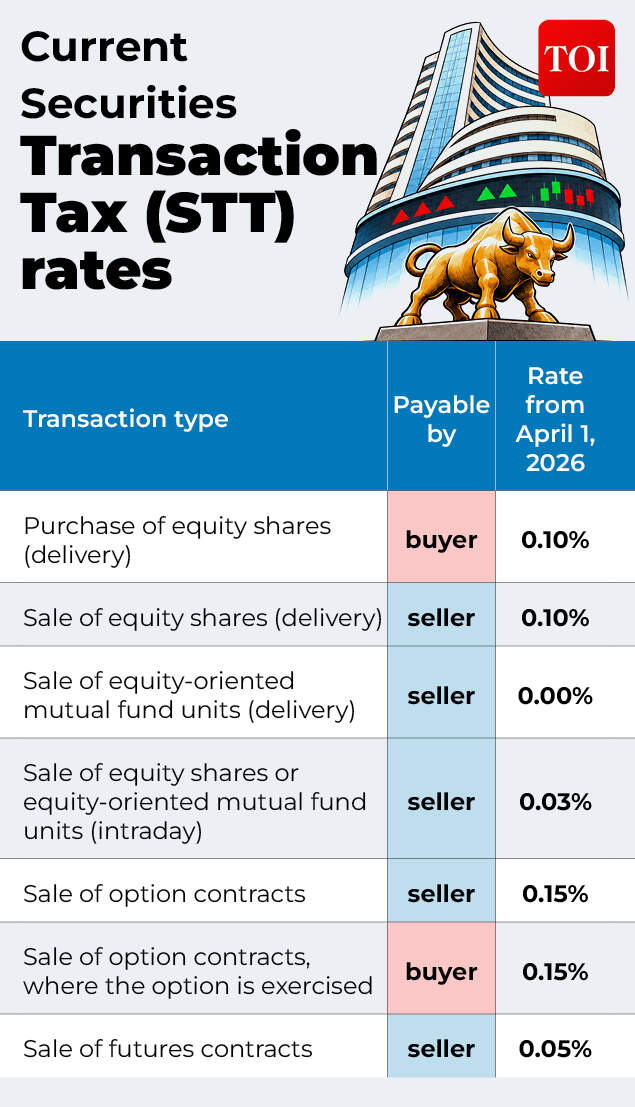
Current Securities Transaction Tax
Critics of any further increases argue that the derivatives market has little room left to absorb the additional costs. As one review puts it:Former public sector banker Kulvinder Singh Sethi said, “After successive hikes in STT, output rates are already sensitive to cost frictions. Increasing the STT by another 50% risks suppressing trading activity and liquidity – meaning that the real benefit of income may come to direct speculation while displacing capital used for conflicting metals or offshore areas.
From legislation to evolution: 22 years of STT reforms
The tax is nothing new. It came in 2004 to replace the LTCG tax on listed shares, and successive Finance Acts have pushed it in both directions, sometimes increasing rates, sometimes reducing them, and sometimes changing the basis on which it is calculated.
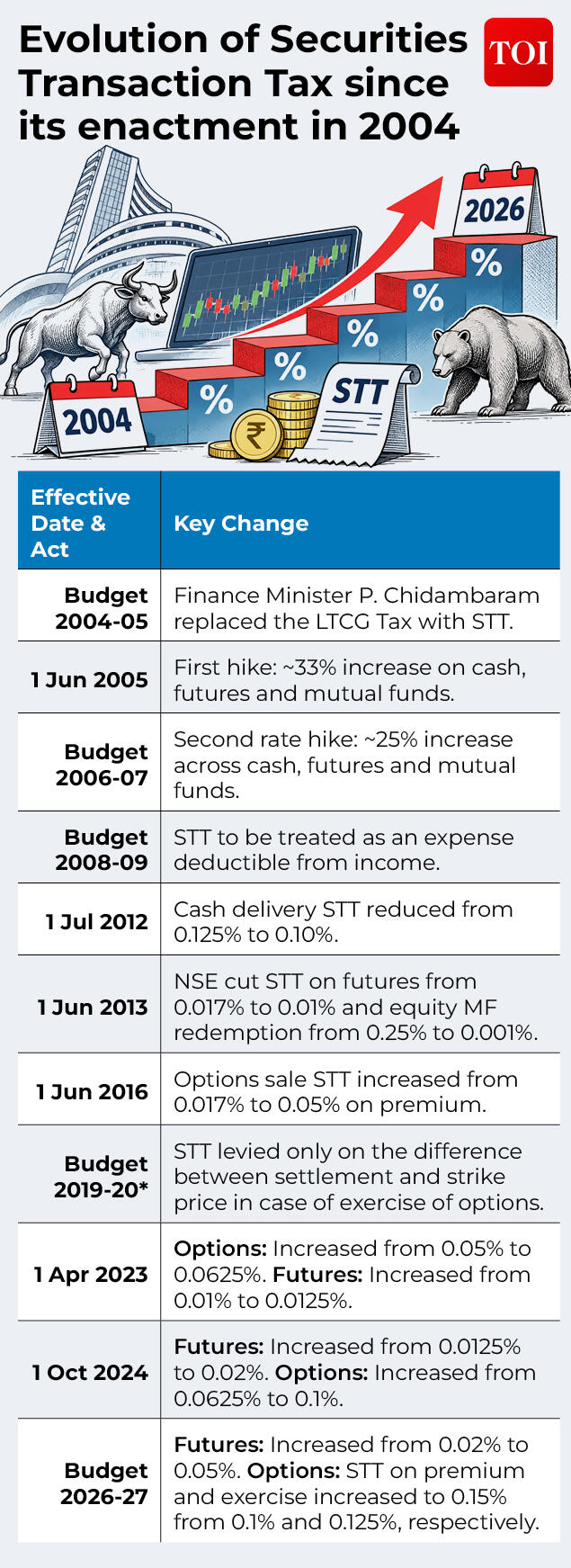
The Evolution of Securities Transaction Tax
Read sequentially, the timeline shows a broad expansion of the first two years, a spell of relief around 2012 and 2013, and then, from 2016 onwards, a series of hikes aimed at derivatives.
Immigration did not take the bait
On the income front, the recent increase has clearly delivered. As of September 17, STT collections for 2026-27 stood at Rs40,214.36 crore, up nearly 53% from Rs26,305.72 crore recorded in the same period last year.Jumps trace back to new values. STT on futures went from 0.02% to 0.05% of the sale price. For options, the premium tax has increased from 0.1% to 0.15%, and the tax on exercised options has increased from 0.125% to 0.15% of the net value.However, the higher STT did not translate into stronger interest from foreign investors. NSDL data shows foreign portfolio investors (FPI) flows fluctuate between inflows and outflows in 2026.
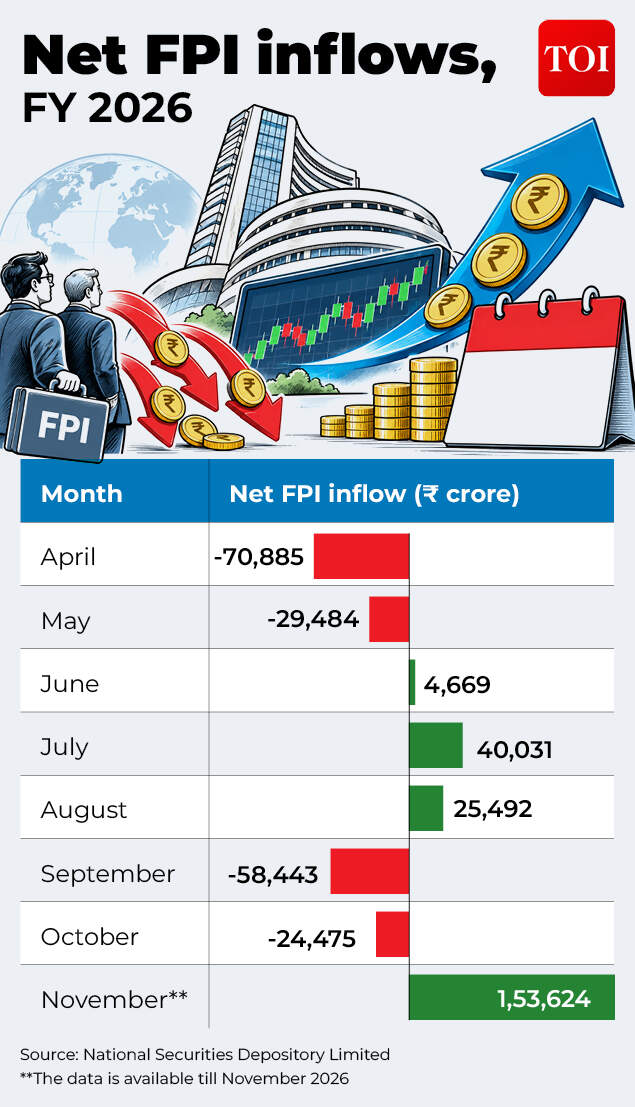
NPI entry, FY 2026
“FPIs are already navigating rupee currency dynamics alongside capital gains tax rules. “Because the STT is charged as a pre-purchase fee regardless of whether the trade ends in a profit or loss, a higher STT raises round-trip friction for foreign currencies that use pooled, arbitrage, or cross-market strategies—making competitive Asian markets look relatively clean of transaction costs,” Sethi said.
Signs from the road and financial services
Market sensitivity on this topic was shown on October 13, 2026. The BSE Sensex rose over 1,100 points and the Nifty 50 gained about 1.6%, adding over 350 points. A contributing factor was Finance Minister Nirmala Sitharaman’s willingness to hear from stakeholders on LTCG and STT before Budget 2027.At the Bloomberg New Economy Forum 2026, when asked if the LTCG and STT tax could be revised, he replied: “We are very close to the Budget, and the preparation of the Budget has already started. It may not be the best time to say what I will or will not think,” and added that he would welcome suggestions on the matter.This round indicates the expectation of investors that the tax structure will be revised. Some observers insist that the manner in which the income gap is closed is as important as the relief itself:“From a market-microstructure point of view, reducing labor tensions—or giving LTCG relief without a punitive STT hike—is more healthy for price discovery than using STT as a revenue plug,” Sethi said.Sethi added that since STT is charged on the value of the transaction, regardless of whether you make a profit or incur a loss, increasing the tax rate will lead to liquidity penalty and prevent market participation.
Source link