Archaeologists at a rock shelter in West Texas found a hunting kit that had been left untouched for about 6,500 years, containing 10 arrows, a broken boomerang, a spear thrower and a rolled horn hide with hair still intact.

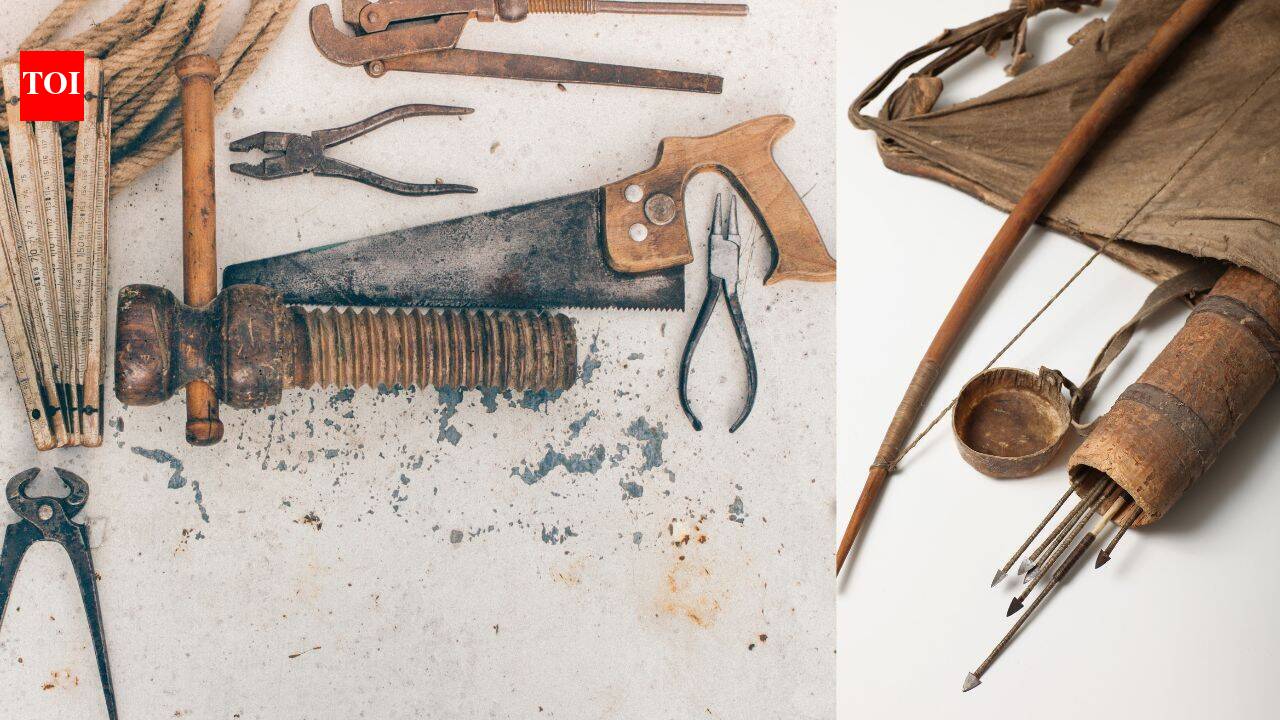
A group of friends collects their small but most valuable belongings in a box or tin, closes it tightly, and buries it in a park or garden. The concept of time capsules is interesting because they symbolize the material culture of the time in which they are hidden, and tell you about the habits of the people of that era. However, not all time capsules are planned. Others fall behind in haste, disaster, or simply get lost. One lost artefact was found buried in a rock shelter in West Texas, and it is an ancient hunting kit.Deep inside the San Esteban Rockshelter, archaeologists have found parts of a hunter’s armor, according to a report by Earth.com. The Center for Big Bend Studies at Sul Ross State University announced the findings in its spring 2025 newsletter. Bryon Schroeder, the Center’s director at the time, told Texas Parks & Wildlife Magazine that the kit had been untouched for about 6,000 years. The agency called it “possibly the oldest example of a full-scale weapons system in North America” in its newsletter. The findings are unique and useful because wood tends to rot and does not last long. This is why archaeologists are often left with a pile of arrows to build a story around.What does the kit contain?The kit includes six stone-tipped dart foreshafts, four do-it-yourself hardwood foreshafts, and four knock-end, putter-sized back tips. Includes a broken hunting boomerang. Another rare find is a partial atlatl, an ancient type of spear thrower.The kit included a folded pronghorn skin that had been tanned, and its hair was still intact after thousands of years. The holes were spaced around the perimeter of the skin, suggesting it could be tied to the frame. This, as the official release explains, was a common practice among Plains groups.Bryon Schroeder, former director of the Center, expressed the team’s surprise at the discovery. He recalled in Texas Parks & Wildlife Magazine that the team “just sat there and watched in awe.”Wait, what’s an atlatl?In today’s world of guns, missiles, and even drones, it’s hard to imagine what the atlatl could be. It was a simple stick-like tool, with a handle at one end and a hook or socket at the other. It acts as an extension of your arm, making the arrow fly faster and farther than you can throw by hand.The age of the atlatl was determined using radiocarbon dating by Schroeder and Devin Pettigrew in their 2023 study, published in the Journal of Big Bend Studies. The study places the age of this weapon at more than 6,000 years, making it the oldest atlatl directly documented in North America at the time of publication.Why is it importantSchroeder explained the relevance of the findings to reconstructing the past: wood can be used to rethink nature and understand the time these people spent making their tools. In the Center’s newsletter, he says, “We get these wonderful pictures of life, vignettes of how they lived, what nature was like and how they reacted to it.”About those daysWhile the Center places the kit at about 6,500 years old, the team from the University of Kansas, which has celebrated near the Center since 2019 with the Odyssey Archaeological Research Fund, places the arrows and foreshafts at about 6,200 years ago.The Kansas team reports that the pronghorn skin, which was sitting about two inches above them, is 5,621 years old. That’s about 600 years younger than other arrows and arrows, so the skin may have been placed there later than the weapons.So a hunting kit may seem like a single collection, but research shows that items found in the same place arrive at different times.
Source link