How to help your toddler develop focus, memory and problem-solving skills at home

Ask any parent of a young child about their child’s attention span, and you probably won’t get a straight answer. In a moment, a child is happily playing with a toy; the following have left it.
They may ask you to build blocks with them, just to distract their attention from the plane passing overhead. It may seem like a problem, but Ms Munira Dattani, founder of Tickle Right and early childhood consultant, explains that this is a natural part of early childhood development. Young children are not expected to concentrate for long periods of time. Their brains are constantly exploring, learning and building the foundations for skills such as concentration and memory through everyday experiences and play.
What does concentration, memory and problem solving mean?
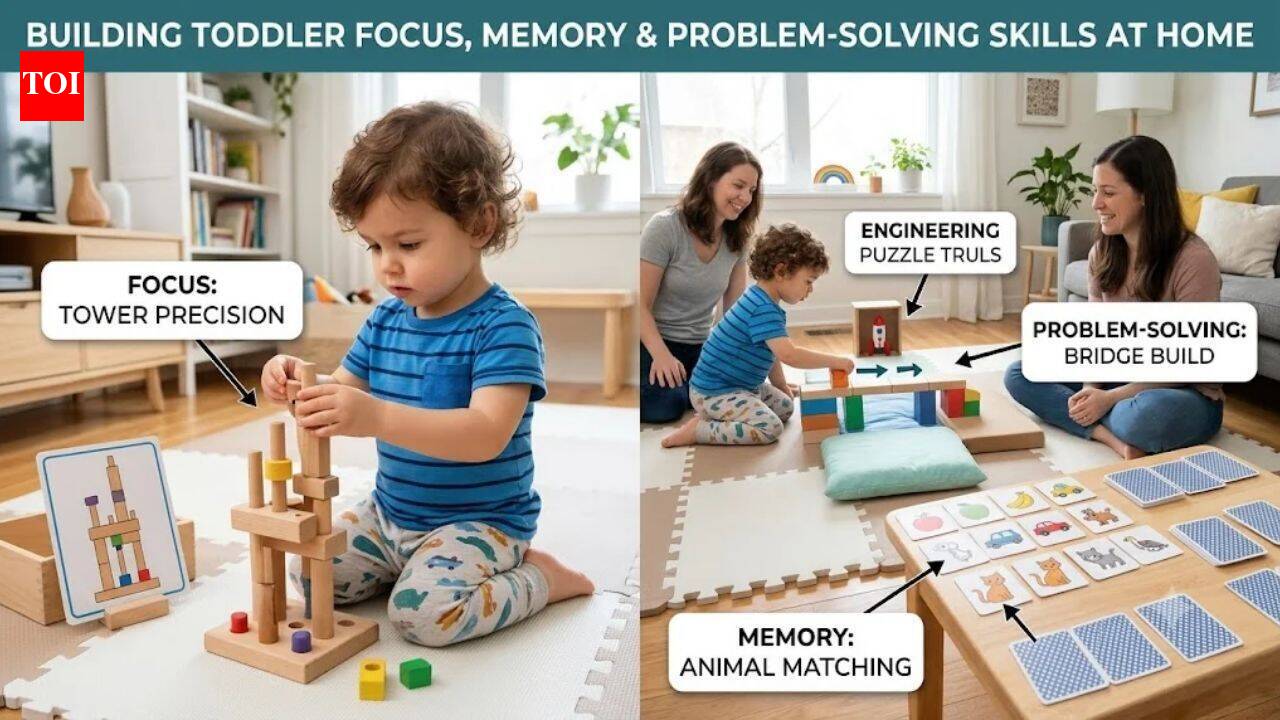
FOCUS the child’s ability to pay attention to what he is doing without being pulled or distracted by anything around him.REMEMBER it is the ability to hold on to what they have seen or heard, such as a familiar face or what happened when they went to the mall, and retrieve it later when needed.PROBLEM SOLVING basically finding a way when something doesn’t work, for example, arranging pieces of blocks in such a way that they don’t fall.These three skills develop together, and the first years from birth to 5 years are where they begin.
Why are the early years important?
.Various organizations, such as the American Academy of Pediatrics, say that between birth and 5 years, the brain develops emotional connections at a rapid pace. This connection is strengthened through repetition and interaction. Skills such as attention, remembering information, and problem solving are part of everyday life.
You don’t need to build a structure at home, but something as simple as playing with your hands or an adult who interacts with them and gives them attention is enough.
Let’s see some of the things you can easily do at home to build their focus, memory, and problem-solving skills.
Building Focus
A toddler’s attention span is only a few minutes, short and varies from child to child; the goal is to stretch that window gently and not forcefully.REDUCE DISTRACTIONS– If your toddler is already doing something or playing with toys, minimize distractions; for example, if the television is on in the background, it will distract them. And give them one or two toys at a time and keep rotating a few options every so often, leading to longer and deeper play.FOLLOW THE CHILD’S INTERESTS– When your child watches the birds in the sky or stacks a block, they are actually practicing sustained attention.
Parents can join and ask them some questions, but without taking interest.CHOOSE PROFESSIONAL JOBS -You can involve them in other household activities such as sorting things like large pom-poms or fruit by color or stacking cups that are very toddler friendly while building concentration and hand-eye coordination.
Building a Memory
Memory develops through repeated experiences, fun and meaningful associations.
Children often cling to emotional or sensory experiences.INCLUDE THEIR FEELINGS: When you are at home doing something, let your child explore different things at home by himself. For example, let them hear the texture of different things; make them smell the fresh coriander. When different senses are involved, it will create an experience that is easier for them to remember.DISCUSS ISSUES INCLUDING: When you tell your child a story, tell them about their day, like we first went to the park, and then you play on the swing, which makes them refresh the memory of their day.Link Reminder to Comments: Children often remember their fun times and meaningful interactions. Laughing at a silly joke is always more memorable than any lesson.
Building problem solving skills
Problem solving skills start with your child when you give them the opportunity to overcome their obstacle on their own. When we solve their problems, we remove the habit that builds thinking skills.PAUSE AND GIVE DETAILS: When your toddler figures out how to complete a puzzle, pause before helping him; first, let them complete it, then give them advice on how to complete it.GIVE OPEN GAME: There are many things around your house, such as blocks, Play-Doh, and cardboard boxes, that don’t use one right, so your child can try and choose anything to do or play with those things. For example, a cardboard box can be a car for a playground dog that can take the shape of an elephant.GIVE THEM A REAL JOB: If you involve them in real homework or whatever you do, it helps them build self-confidence.
For example, let them match or arrange fruit in a basket and carry clothes from one room to another. Sort out the different pulses.
A frequently asked question
1. My toddler quickly loses interest in toys; ok?Yes. Toddlers’ attention spans are much shorter than adults’, and their natural curiosity keeps them from one thing to another. Offer 2-4 toys at a time and keep rotating them, which will help them play continuously for longer.2. Why does my toddler want to read the same story every day?Repetition is how young children learn. Hearing the same story helps them predict what will happen next, which helps strengthen their memory and builds confidence.3. Do I need special toys to develop their skills?The answer is no. Your everyday household items like containers, blocks, and cardboard are enough.4. Does sleep affect memory and concentration?Sleep helps your brain process what you’ve done throughout the day.
Toddlers or children between the ages of 1 and 3 need about 11-14 hours of sleep a day, including naps. Children who do not sleep well struggle to focus or concentrate.
The conclusion
Raising a child who can concentrate, remember, and think doesn’t require a full schedule, but what you need is time, attention, and patience. A few minutes of uninterrupted play, a story they make up, or a puzzle they’re allowed to figure out on their own. All these moments are forming your young mindsWhen doing so, always remember that each child grows at their own pace, and comparing them to any other child will set unrealistic expectations for you. Short, meaningful interactions throughout the day work better than any lesson plan. In the end, building all these things, such as concentration, memory, and problem solving in your child, is not about using any big expensive thing but more about your presence and your cooperation.
Such daily movements that involve them shape your child’s brain.