In 1982, the Japanese discovered Shinrin-Yoku, the magical concept of forest bathing; today, research links it to the reduction of stress hormones

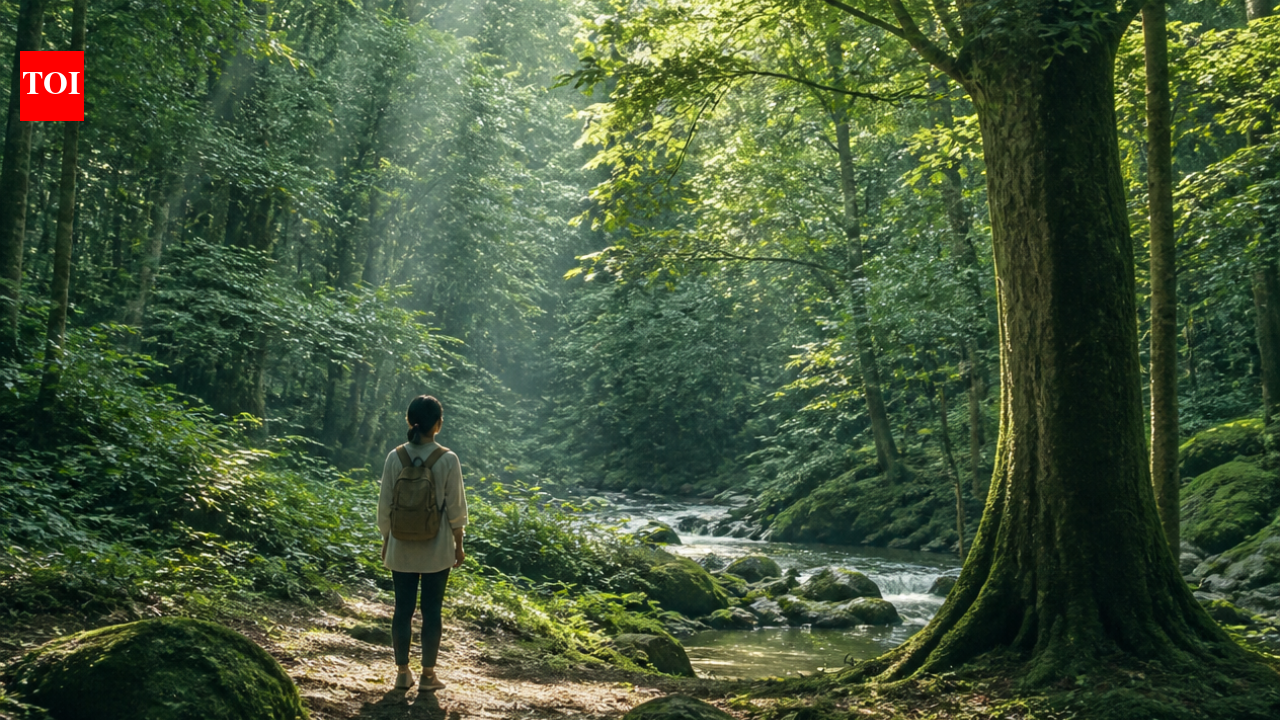
Long before we had calming apps, we had trees. Our ancestors sat under the canopy, listening to the leaves, and reading the weather by noticing the movement of the branches. Somewhere, we traded all that for glass, metal, and the blue glow of screens.Yet the old magic has never left us. Think of the deep breath you take when you get under a big tree on a hot day, or the way your shoulders drop when the noise of the city fades behind you. Everything seems to go slowly, and the body just remembers.The forest asks nothing of us. It has no notifications, no deadlines, and no overview of how our week went. It gives us the light that moves, the air that smells like Earth and the rain, and the silence that enters our brains, and everything stops working slowly.That is why the Japanese discovered the art of ‘forest bathing’ and called it shinrin-yoku.Let’s dig into what science has to say about it.
What is forest bathing?
Forest bathing is the English word for shinrin-yoku, the Japanese practice of taking in the forest air. A 2019 review published in the International Journal of Environmental Research and Public Health notes that this concept was first proposed in 1982 and that trained guides often help people experience the forest with all their senses. It also draws on Japanese concepts such as komorebi, sunlight streaming through trees, and wabi-sabi, the beauty of impermanence, all of which are linked to mindfulness related to trees.
Shinrin-yoku helps reduce stress
A 2019 review and meta-analysis found lower salivary cortisol, the stress hormone, in forest groups than in urban groups. According to the authors, forest bathing “can significantly influence cortisol levels in the short term.” They also say that placebo effects may play a role and that more research is needed because the data is limited.
What effect does it have on the body?
In a 2007 study published in the International Journal of Immunopathology and Pharmacology, twelve healthy men took a three-day, two-night hike in the forest and walked for two hours. Eleven of them showed higher natural killer cell activity later, a 50 percent increase. Natural killer cells are part of the immune system.In 2019, researchers reviewed 28 research papers on forest bathing. They get symptoms of cardiovascular benefits, stress hormones, anxiety, and depression. The researchers also agreed that bathing in the forest “may greatly improve people’s physical and mental health.”
Does it have to be a real forest?
A 2022 study by Tsao and his colleagues, titled “Forest Walking Is Better Than Walking in an Urban Park,” was a pilot study with 25 volunteers, comparing walking on forest trails to walking in city parks in Taipei. After walking in the forest, systolic blood pressure decreased by 5.22 mmHg and heart rate by 2.46 beats per minute.A quiet walk through the trees is inexpensive and safe, so, just once, just turn off your phone, walk slowly, and notice what you see, hear, and smell, and it may help ease your mood.
Source link