In a village in Karnataka where patients were taken to hospitals by rickshaws, drivers and residents raised money to buy an ambulance worth Rs 12 lakh; drivers now provide free emergency transportation in two villages

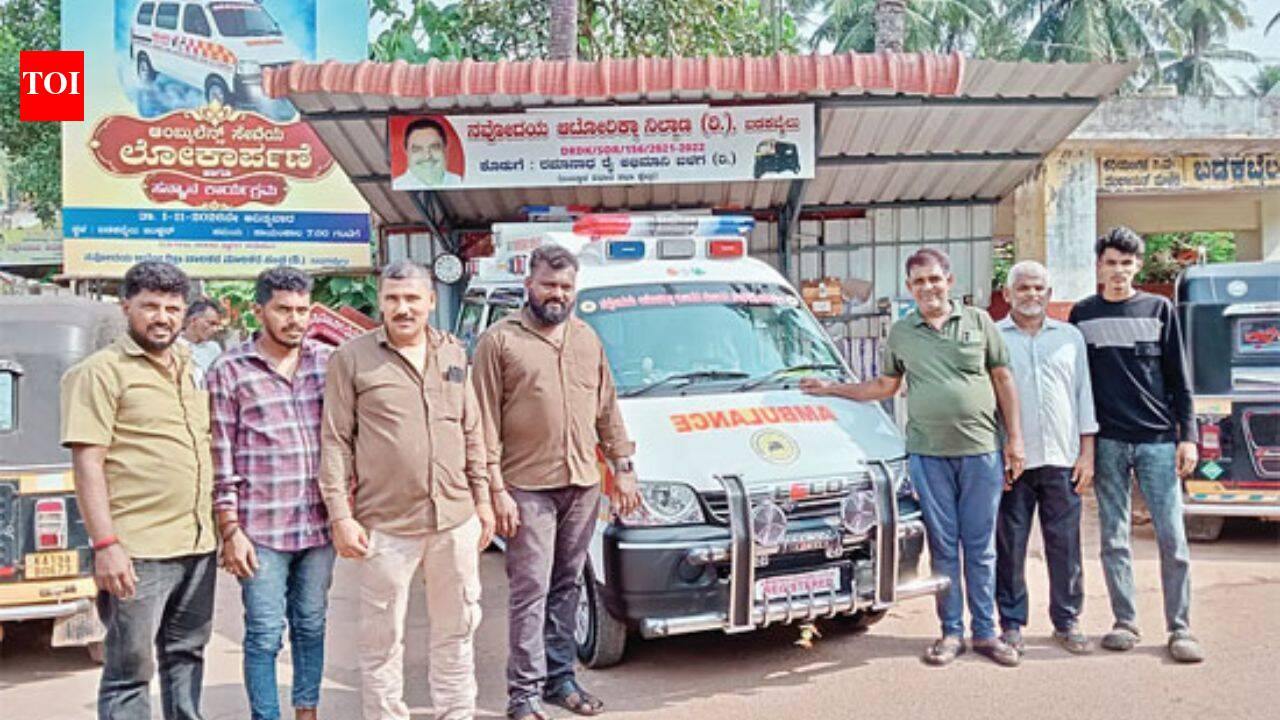
The arduous journey to the hospital was the reason for a dramatic public initiative in Karnataka. After rushing sick residents to hospitals in rickshaws because ambulances were not readily available, a group of drivers decided to find a permanent solution. They pooled their savings, sought help from locals and donors, and bought a fully equipped ambulance costing around Rs 12 lakh. Today, the drivers themselves take turns to provide free emergency transportation to residents of two villages in Bantval taluk.
When auto-rickshaws become the only option during emergencies
In several parts of rural India, reaching a hospital during an emergency can be a challenge, especially if an ambulance is not readily available. Residents of Kariyangala and Ammunje villages in Bantval taluk of Karnataka have faced this ordeal many times. Whenever someone fell seriously ill or needed urgent medical attention, families sometimes had no choice but to rely on auto rickshaws to transport patients to hospitals.However, for auto-rickshaw drivers, these situations were not easy to handle. Their vehicles were not designed to transport patients in need of emergency medical care, and the absence of a dedicated ambulance made an already stressful situation for families. Repeated experiences finally made the drivers realize that the villages need proper ambulance service. Instead of waiting for an outside organization to fix the problem, they decided to take it upon themselves. This initiative was led by Navodaya Auto-rickshaw Drivers and Owners Association of Badakabail in Kariyangala village, near Polali.
How little donations turned into an ambulance worth Rs 12 lakh
What makes this program more remarkable is the way the drivers organized the money. Rather than relying on one large donation, members of the organization contribute small amounts each day. The money collected from drivers and owners was combined with financial assistance from villagers and other sponsors. The group bought an ambulance for around Rs 10 lakh. Another Rs 2 lakh was spent on installing the necessary ambulance equipment in Mysuru, taking the investment to around Rs 12 lakh.A donation-based approach allowed low-income people to participate in a project that would benefit the entire community. For the drivers, the ambulance was not just another vehicle. It was a concerted effort to ensure that rural people would not have to rely on regular passenger vehicles when someone needed urgent medical attention.
The drivers will operate the ambulance themselves
The association also worked out how the work would work. There are probably auto-rickshaws operating at the Badakabail stand, and an ambulance will be parked near the venue to be accessible in case of an emergency. Interestingly, auto-rickshaw drivers will work as ambulance drivers. This means that the community that identified the problem and raised money will also commit to running this program.The ambulance will serve the residents of both Kariyangala and Ammunje villages. The service will be provided free of charge, helping families access emergency transportation without having to worry about paying for the trip. By keeping the car close to the rickshaw stand and involving local drivers, the organization hopes to make emergency transportation more accessible to people in the surrounding areas.
A community that gives beyond this program
This ambulance work is also part of the great effort made by the organization to support people in need. Every month, Rs 100 is collected from each rickshaw driver to help poor people. Over time, these donations have helped drivers and owners collectively raise more than Rs 4 lakh for various social causes. The latest move reflects the same spirit of joint commitment. Each donation was small individually, but together, drivers, residents and sponsors were able to organize the necessary funds to buy and equip an ambulance.For the residents of Kariyangala and Ammunje, the new vehicle represents more than improved transportation. It provides an additional option when a medical emergency strikes, reducing their reliance on auto rickshaws for trips to hospitals. The program also shows how local communities can identify everyday problems and work together to solve them. The drivers were aware of the difficulties that the citizens face because they were involved in transporting patients during emergencies.Instead of viewing those experiences as rare occurrences, they make them a reason to take action. Their effort is a reminder that meaningful community service does not always begin with large organizations or large resources. Sometimes, it starts with a group of people seeing a shared problem and deciding they can do something about it. For these auto-rickshaw drivers, the goal was simple: make sure that no citizen has to depend on a regular passenger vehicle when an ambulance is needed.
Source link