As melting sea ice pushes more than 200,000 Pacific walruses off the coast of Alaska, conservationists have permanently protected 47,473 acres of their largest North American roost.

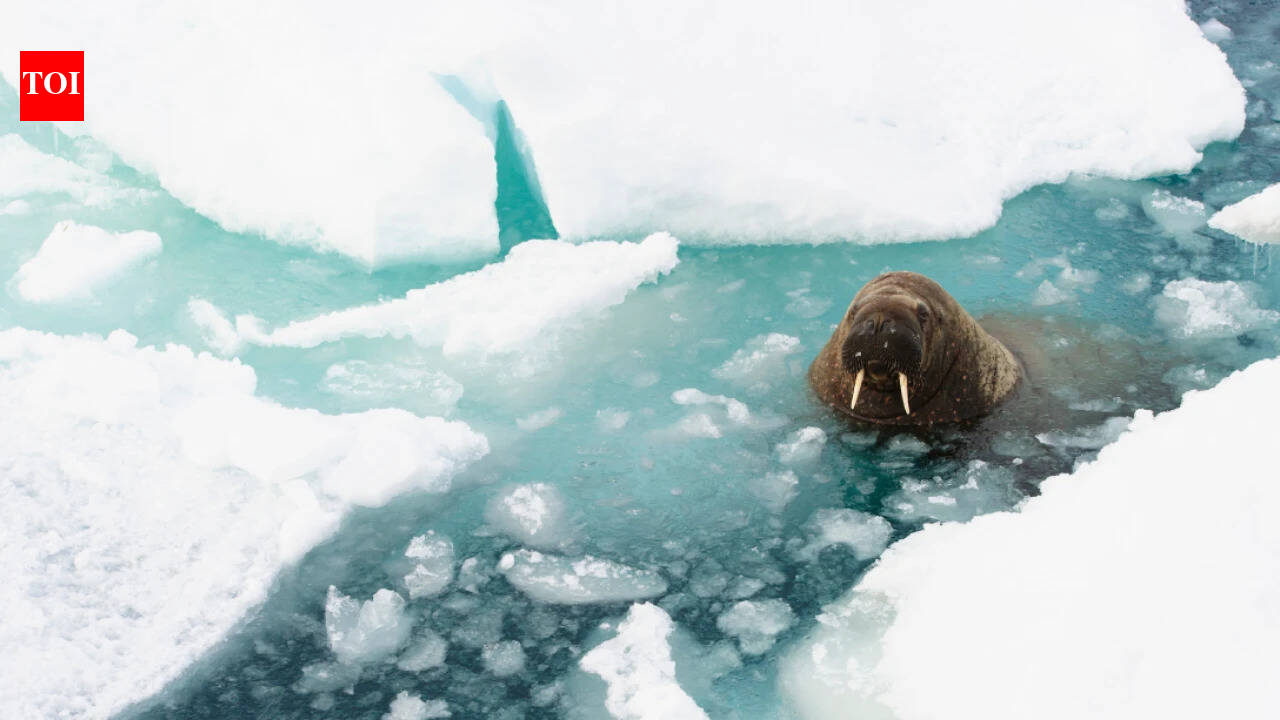
Along the northwest coast of Alaska, thousands upon thousands of Pacific walruses gather in narrow estuaries, their massive bodies pressed against each other as far as the eye can see. Some are lying on the sand, others are shuffling towards the water, while the little walruses squeeze through the crowd, trying to find a little space. What might look like a hectic day at sea is, in fact, a survival story for one of the largest marine mammals in the Arctic.As the Arctic begins to warm and sea ice becomes increasingly unreliable, more than 200,000 Pacific walruses are now congregating on the coast near Point Lay, Alaska. The animals once relied on floating sea ice to rest during their foraging journeys, but since that area is gone, they have been forced to land. Now, the Conservation Fund’s initiative has permanently protected 47,473 hectares of its largest North American habitat, giving the animals and indigenous communities that depend on the area much-needed protection.
Why do thousands of walruses gather on the coast of Alaska?
The roundup, known as the migration, is part of the Pacific walrus’ seasonal migration. These animals spend most of their time in the waters of the Bering and Chukchi seas, traveling between Alaska and Russia. While males generally stay in the Bering Sea year-round, females and their young travel north across the Bering Strait to the shallow feeding grounds of the Chukchi Sea.Walruses are bottom feeders. They dive into shallow water to search for clams and other invertebrates buried in the sea, using their sensitive whiskers to find food. But these foraging trips require energy, and the animals need a place to rest between dives. For generations, floating sea ice provided just that. Mothers could rest with their calves on the ice, near their feeding areas, before returning to the water.But, Arctic sea ice is becoming increasingly unreliable; as temperatures rise and ice retreats northward, it can move across the shallow continental shelf where walruses often feed. This leaves the animals with few easy resting places and forces them to swim long distances between feeding and resting places.When the snow disappears, animals gather on the ground instead. Point Lay, a small town in northwest Alaska, has become one of their most important destinations. Large herds began to appear here in 2007, initially consisting of several thousand females and calves. Today, the site attracts more than 200,000 walruses each fall, making it the largest migration site for Pacific walruses in North America.However, a crowded beach is not necessarily a safe one. With such large animals packed into such a small area, even the slightest disturbance can have devastating consequences.Walruses are very sensitive to unfamiliar sounds, sights and smells. The presence of boats, low-flying aircraft, tourists or other human activities can scare the herd. When startled, thousands of animals may rush into the water in what is known as a stampede. Young walruses, especially calves and juveniles, can be caught under adults and mauled in the chaos. Such events have killed hundreds, and sometimes thousands, of small animals.Ironically, the very land that gives them refuge from the disappearing sea ice can be dangerous when they are disturbed. Repeated disturbances can even cause walruses to stop pulling altogether, leaving few resting spots.
I Savings Fund he enters
This is where The Conservation Fund’s latest initiative begins. On November 18, the environmental non-profit organization announced that it has permanently protected 47,473 hectares of land around Point Lay, including barrier islands used by walruses to mate.This agreement was reached with the Cully Corporation, an Alaska Native company that owns the land. Rather than buying the entire property, the Conservation Fund obtained a conservation easement, which places permanent restrictions on how the land can be developed or used. This plan protects the habitat from fragmentation and resource extraction, including potential coal and stone development.Conservation does not always mean taking land from the people who own or depend on it. The Cully Corporation retains ownership, while the protected status of the land limits activities that could threaten the walruses. The Interior Alaska Land Trust will manage the easement, with increased management aimed at reducing both direct and indirect disturbance.This agreement also considers the people who have called this place home for generations. The local Inupiaq community depends on the environment and water for their livelihoods, culture and traditional ways of life. Citizens will retain access to the natural resources they need, and the financial arrangement aims to strengthen the organization’s position and reduce pressure to sell land for industrial development.The program has received support from several organizations, including the Wyss Foundation, the Gordon and Betty Moore Foundation, the Holdfast Collective and the National Fish and Wildlife Foundation through Walmart’s Acres for America program.
What does this mean for walruses and the local community?
Conservationists see this agreement as an important step, but they are also clear about what they cannot achieve. Protecting a country does not bring back the sea ice that has disappeared, nor does it bring back habitat for lost animals. However, it provides them with a safe place to gather as they adjust to the changes in the Arctic.Marine scientist Chelsea Koch from American University when talking to CTV News pointed out that animals adapting to new conditions does not mean that their habitat is equal to what they lost. He believes that conservation projects that involve local communities in protecting important wildlife areas hold promise, as long as residents have a say in decisions, their traditional rights are respected and there is ongoing support for monitoring and management.For the people of Point Lay, the relationship with walruses goes beyond wildlife conservation. Animals and the surrounding water are part of community livelihoods and cultural heritage.There is also a request for visitors to be aware of animals. While seeing more than 200,000 walruses is understandably interesting, Point Lay is not a tourist attraction. Approaching a transport site to photograph animals, flying high overhead or approaching boats too close can be dangerous. Harassing or disturbing walruses is also prohibited under the Marine Mammal Protection Act.As John Wros of the Conservation Fund put it, the damage caused by the loss of sea ice has already been done. This project is an attempt at real-time adaptation. It won’t be able to reverse climate change, but it can make sure that the animals facing its effects have a safe place to go.
Source link