Petrol, diesel prices have increased by just 7% in India in four years compared to 50-70% globally, says Hardeep Puri; but India’s oil and gas import bill fell 60% to $16 billion by October 2026 as Brent almost doubled.

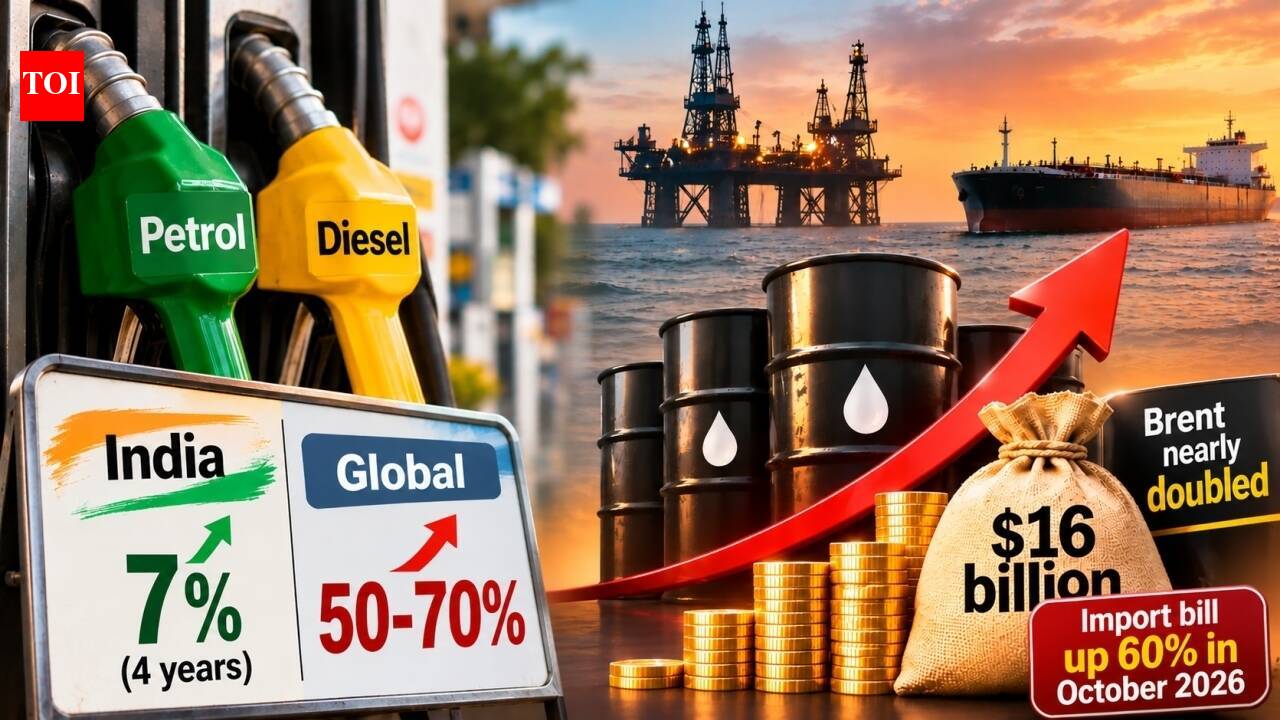
India has seen the price of petrol and diesel increase, but the government has said that the increase is very small compared to other major economies in the world.Oil minister Hardeep Singh Puri said on Sunday that petrol and diesel prices in India have increased by just 7% over a four-year period, much less than the 50-70% increase recorded in other parts of the world.He pointed out that the limited increase was the triple reduction of sales tax and the role of oil marketing companies in absorbing losses instead of passing the entire burden to consumers.
The government says the rise in oil prices is contained
Explaining the Center’s efforts to keep fuel prices at a level, Puri said the excise duty has been reduced three times since November 2021. He maintained that, in the four years under review, fuel prices in India have really decreased.“India is a unique case globally….In fact, if you look at a four-year reference period, prices in India have really come down. Meanwhile, elsewhere in the world, petrol and diesel prices have increased by 50-70%, while in India, they have increased by only 7%,” said Puri.He said the difference between the distribution of fuel prices in this country and in other countries is the result of the three tax cuts of the Center and the actions of oil marketing companies. According to the minister, these companies suffered huge financial losses rather than passing on the full impact to customers.“This is because the central government has reduced the excise tax three times, and our oil marketing companies like BPCL, IOCL, and HPCL have acted as good citizens. They have incurred huge losses and operated at a deficit,” he said.Puri acknowledged that international conflicts and the uncertainty of the political environment continue to pose challenges. He expressed his hope that the tension will eventually subside, paving the way for a drop in the price of crude oil.“I am not talking about the past, as if this issue is behind us completely; we are still facing challenges. The war between Russia and Ukraine continues, and there are tensions involving Iran, the US, and Israel. We hope that these tensions will subside and the price of crude oil will decrease,” he said.
India’s oil debt balloons
Meanwhile, India’s net spending on oil and gas exports rose 60% year-on-year to $16 billion in October, boosted by higher crude oil prices. Brent crude averaged $124.77 a barrel during the month, almost double its level last year, according to data released by the Petroleum Planning and Analysis Cell (PPAC), which operates under the oil ministry.The import bill totals $10 billion by October 2025. Spending on crude oil exports alone rose to $19.5 billion from $10.4 billion a year earlier, although import volume grew 11% to 23.3 million tons. Imports of Liquefied Natural Gas (LNG) accounted for $1.3 billion, while exports of petroleum products generated $6.3 billion.Brent crude had reached $116.77 a barrel in September, compared to $64.75 in October 2025. The average price of a basket of Indian crude oil also rose sharply, reaching $119.91 a barrel in October compared to $65.08 in the corresponding month last year.In the April-October period, India’s oil and gas import bill grew to $97.7 billion from $70.3 billion last year. Although the volume of crude oil imports increased by only 2.7%, the cost of these imports rose to $111 billion, compared to $72.3 billion in the previous period.Meanwhile, consumption of liquefied petroleum gas (LPG) decreased by 12.3% in October and 15.1% in April-October. PPC data showed that the number of active domestic LPG consumers fell to 32.6 crore as of November 1, from 33.4 crore on April 1.Direct LPG purchases by private players also fell sharply, down 83.8% in October and 97.3% in the first seven months of the financial year. Domestic LPG sales by state-owned companies fell by 11.8% in October, while bulk LPG sales recorded a steep decline of 49.1%. In contrast, auto LPG sales increased by 23.9%.Imports of petroleum products in India fell 41.2% in October, taking the decline this fiscal year to date to 49.3%. According to the Petroleum Planning and Analysis Cell (PPAC), the decrease in imports in April-October was mainly due to reduced purchases of LPG, petroleum coke and oil in the foreign markets.
Should the government lower the excise duty on fuel?
3k+ users shared the idea today
5k+ users already voted today
3k+ users shared the idea today
Share an idea
Indian refineries processed 24.1 million tonnes of crude oil in October, marking a 7.1% increase and equivalent to around 5.70 million barrels per day. Imported crude accounted for 22 million tons of the total, while domestic production accounted for 2.1 million tons. Imports accounted for 88.7% of the country’s crude oil consumption during the month.Domestic production of crude oil and condensate stands at 2.3 million tonnes. Meanwhile, India’s dependence on imports to meet its natural gas needs was 52.8% in October.
Source link