Scientists bury invisible plastic in a New Zealand harbor to test what happens when a storm hits the ocean |

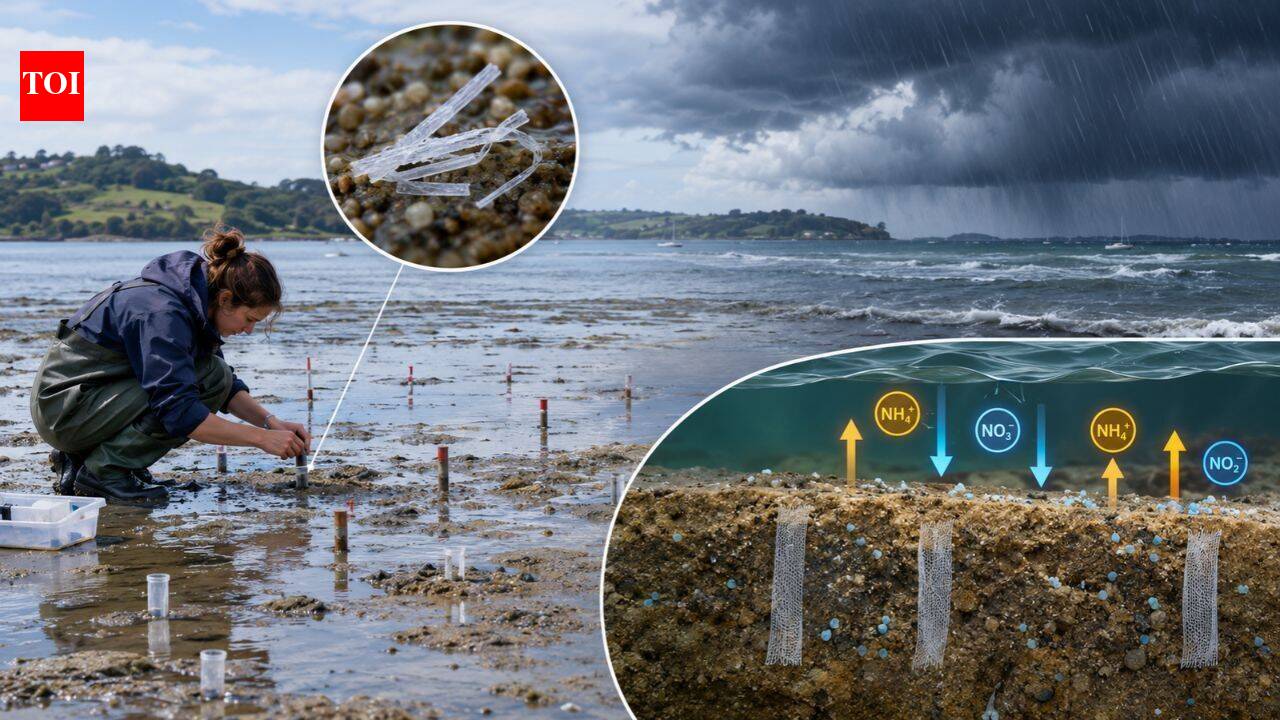
Scientists studying plastic pollution in a New Zealand estuary have found that invisible plastic particles can change how coastal sediments react to storms. Researchers buried small pieces of polyester netting in the ocean and measured changes in oxygen consumption and nutrient turnover before and after extreme weather. Scientific Reports published 2026 results showing that plastic-contaminated sediment behaved differently from uncontaminated areas when the bay was disturbed by strong winds and heavy rain. The results suggest that plastic pollution can influence key processes that help coastal ecosystems function.
Scientists examine the effects of plastic when a storm hits the ocean
The research was carried out by Ines Bartl, Samantha Ladewig and Simon Thrush from the University of Auckland’s Institute of Marine Science. Their research examined how plastic pollution interacts with sudden environmental changes in Mahurangi Harbour, New Zealand.According to the study, the team established 48 test plots in an area measuring 14 meters by 22 meters in the intertidal sand. These coastal areas are covered by seawater during high tide and exposed as the tide recedes.Half of the plots served as controls, and the other half received polyester netting placed upside down on the soil. Each plastic-coated structure consisted of 81 pieces of netting measuring 6 by 2 centimeters and 10 micrometers thick. The researchers placed the objects in such a way that their upper edge was at the level of the sediment surface.Although the pieces were small, they provided a way to assess how plastic fibers embedded in the shoreline might affect the environment. The researchers also disturbed the control sites using a spatula to ensure that the body’s process of inserting the plastic did not create a false comparison.Over two months in 2022, the group collected measurements at 6 time points. 3 sampling sessions took place before the storm, followed by measurements three days and approximately two weeks after the event.
What happened when bad weather hit Mahurangi Harbour
The typhoon arrived on the 20th and 21st of March 2022, bringing strong northeasterly winds and heavy rain. The study recorded average wind speeds of up to 60 kilometers per hour, with gusts of up to 80 kilometers per hour for about 24 hours. Rainfall ranged from 3.8 to 52 millimeters in a 4-hour period.Such weather can disturb the ocean by producing strong waves and increasing the amount of material deposited in the water from the land. Soil movement can redistribute organic matter and expose buried material to oxygen, changing the conditions in which microorganisms process nutrients.The researchers saw signs of these changes in their study area. Three days after the storm, the water had lower light availability and higher nutrient concentrations than at several previous sampling sites. The team linked these conditions to increased river discharge and sediment blown by wind and waves.Research has shown that storms affect not only the structure of the seabed but also the activity of the bacteria and marine animals that live on it. These insects help break down organic matter and regulate the flow of nutrients between the soil and the surrounding water.The researchers wanted to determine if the presence of plastic changed these processes when the ocean experienced this sudden disturbance.
Why do plastic-contaminated sediments respond differently?
The results showed that plastic pollution alone did not lead to a clear ecosystem response during the experiment. However, statistical analysis showed a significant interaction between plastic treatment and sampling time, i.e. the response depends on the measurement time.One important difference involved soil oxygen consumption, a measure of how much oxygen is used by processes occurring in the ocean.The study found that oxygen consumption in the control areas was reduced by about 24 percent after the storm compared to pre-storm estimates. In contrast, oxygen consumption in the plastic-treated area was 43% higher than the storm response recorded in the control sediments.The researchers also saw changes in ammonium, a type of nitrogen that can move from the river to the surrounding water. In the control areas, ammonium concentrations in groundwater decreased by about 53 percent after the storm, while the amount released from the base increased significantly.The increase in ammonium emissions was even more noticeable in the areas covered with plastic. The study reported a 53% higher release than in control areas three days after the storm.These differences suggest that plastic-contaminated sediments may act and release nutrients differently during extreme weather. The study also found that pore water concentrations of nitrate and nitrite, measured as NOx, were 63% lower in plastic areas than controls three days after the storm.
The importance of these changes in coastal ecosystems
These results are important because coastal soils are important in controlling nutrients available to marine life. Nitrogen helps the production of organic matter, but changes in the way nitrogen moves through ecosystems can affect the balance between soil, water and the organisms that live there.The researchers suggested that plastic pollution could change the balance between the processes that produce ammonium and those that break it down. This may help explain why plasticized sediments released more ammonium while maintaining lower concentrations of nitrate and nitrite after the storm.The team considered several possibilities. This can change the physical properties of the soil eg how easily it erodes, or how stable it is when waves disturb the sea. Plastic surfaces can also provide breeding grounds for microorganisms.Chemical effects may also play a role. The researchers referred to previous work from a similar study that found a faster decrease in the concentration of DEHP, a plasticiser, than the obtained polyester net. They suggested that substances released from objects could affect nearby microbial communities.However, the study did not establish which mechanism was responsible for the observed differences.
Why researchers are examining the combined effects of plastic and hurricanes
According to the researchers, repeated releases of ammonium related to storms can change the availability of nutrients in coastal waters and affect the ability of sediments to store or process nutrients.The team estimated that, if the entire 15 square kilometer area of the Mahurangi harbor behaved like their plastic-coated sites, ammonium emissions following a storm would reach about 0.761 tonnes per day. That would be about 1.6 times the estimated release from the control sediments under storm conditions.
Source link