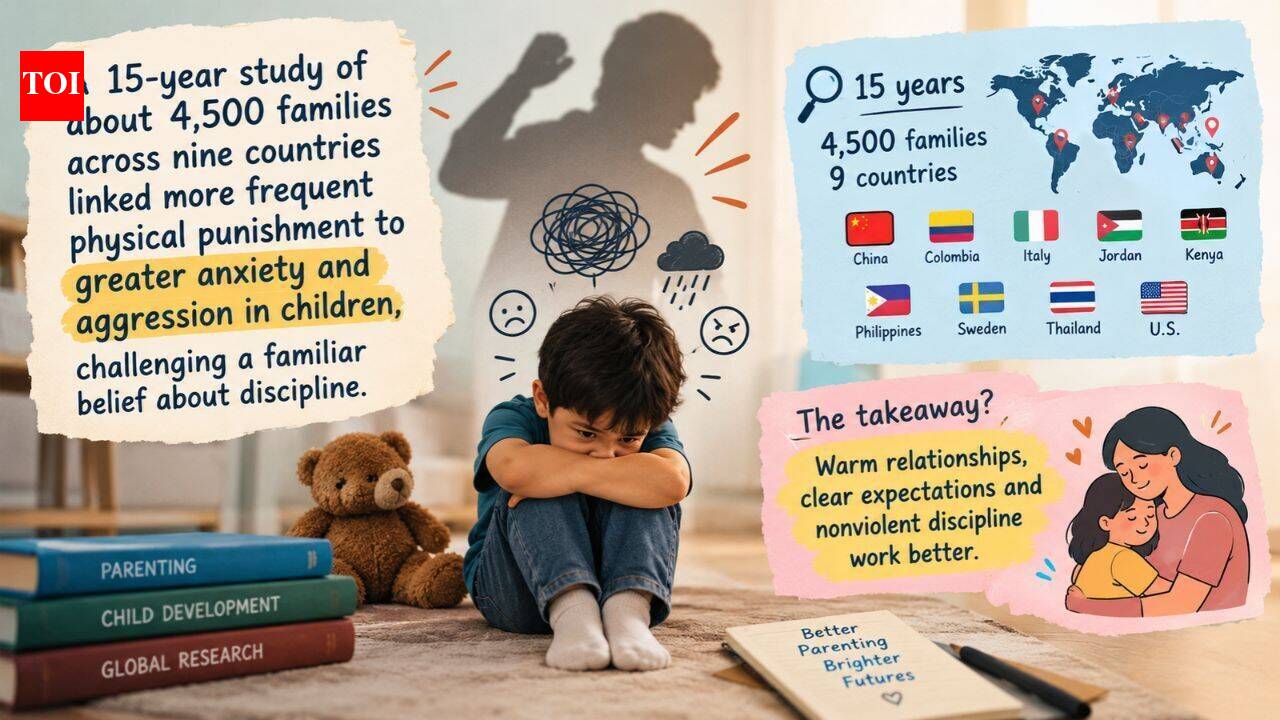
A 15-year study of nearly 4,500 families in nine countries linked frequent physical punishment to greater anxiety and aggression in children, challenging common beliefs about discipline |

The child breaks the rules, refuses to obey or throws a tantrum. For some parents, a slap or a spanking may seem like a quick way to teach obedience. But does corporal punishment really help children become more disciplined, or can it cause long-term problems?Research discussed by Dr. Liane Peña Alampay, a professor of psychology at Ateneo de Manila University in the Philippines, challenges the belief that hitting children makes them behave better. Findings from the international Parenting Across Cultures (PAC) project link more frequent physical punishment to greater anxiety and aggression in children over time.
This study also highlights the importance of making children feel welcome, maintaining clear expectations and setting boundaries without violence.
Parents, if your child refuses to greet relatives, do you make him greet or respect his choice?
What a 15-year study in nine countries found
The Parenting Across Cultures project examined how family relationships, parenting practices and cultural values influence children as they grow up. According to the project’s official website, researchers recruited families from nine countries: China, Colombia, Italy, Jordan, Kenya, Philippines, Sweden, Thailand and the United States.
The project followed families over many years, with an extensive research program spanning about 15 years and involving approximately 4,500 families, according to the report. Alampay, who leads the Philippine area, discussed the findings during the Ateneo Breakthroughs Lecture.Research challenges the idea that physical punishment is a reliable way to improve behavior. Frequent beatings were associated with higher levels of anxiety and aggression. Although the acceptance of corporal punishment sometimes influenced the strength of these associations, it did not make the practice profitable. These results need to be interpreted carefully. The association does not automatically infer that assault alone causes all emotional or behavioral difficulties.
However, the results challenge the assumption that physical punishment is harmless or necessary for raising well-behaved children.
Alampay emphasized that discipline is always important, but it does not have to involve pain or harsh treatment. Parents can guide children, correct mistakes and set rules without using hitting.
Why warmth and strong boundaries are important
Discipline is often confused with harshness. A parent may believe that a child should obey immediately, avoid asking adults and follow instructions without discussion. But researchers distinguish between authoritarian parenting, which emphasizes control and obedience, and authoritarian parenting, which includes clear rules and warmth, communication and understanding of the child’s perspective.
The distinction is important because children need both guidance and emotional security. Rules help them understand expectations, while supportive relationships can make it easier for them to learn from mistakes and express themselves.Research discussed by Alampay also found that rejection, neglect and hostility in children were associated with later emotional and behavioral difficulties.
These included anxiety, depression and aggressive or antisocial behavior during adolescence. Conversely, children who felt important and accepted in their relationships showed greater protection against some of these problems. Warm parenting does not mean letting children do whatever they want.
It means correcting behavior while continuing to treat the child with care and respect. The findings also challenge the belief that warm, accepting parenting is a Western approach that cannot work in Filipino families.
Research suggests that supportive relationships are important across different cultural settings, even though family expectations and parenting practices differ.
Family values can help, but pressure also matters
Family relationships emerged as another important part of the picture. The study found that valuing family responsibilities, such as helping at home, supporting siblings, spending time together and respecting parents, predicted helpful behavior later on.
Among the Filipino participants, these values also appeared to provide some protection against the effects of negative parenting. However, family obligation should not be equated with ‘utang na loob’, a Filipino concept often associated with gratitude and indebtedness.
The relationship between family ties and young people’s well-being needs further study, especially because family expectations can have both positive and negative consequences.Parenting also does not happen in isolation. Financial difficulties, unsafe neighborhoods and instability at home can increase stress and strain relationships. Under these pressures, parents may find it difficult to respond calmly when children misbehave. Recognizing these challenges is important. Supporting parents with practical advice and resources can be more effective than simply blaming them for repeating the habits they acquired when they were growing up.
How parenting programs help families
To turn research into practical support, Alampay discussed Masayang Pamilya, or MaPa, the Philippine adaptation of the Lifelong Parenting program. It aims to strengthen the relationship between the caregiver and the child, prevent violence in the home and improve the well-being of parents and children. The program teaches caregivers practical skills through guided exercises, case studies, illustrated stories and stress management techniques.
These activities help parents practice other ways of dealing with difficult situations instead of relying on harsh punishment.A randomized controlled trial published in 2026 reported a significant reduction in child maltreatment among families receiving MaPa, compared to a control group. Improvements were seen after the program and at a one-year follow-up. The study involved 120 parents of two- to six-year-old children enrolled in the government’s conditional cash transfer program.The Alampay team is working with the Ministry of Social Affairs and Community Development to expand MaPa through family development sessions for beneficiaries of the conditional cash transfer program. The main message is that parents can learn new ways to discipline their children, even if they were raised with physical punishment. Discipline need not mean fear. Clear rules, consistent responses, patience and emotional support can help children understand boundaries while feeling secure in their relationships with the adults they care for.