India’s first bullet train to begin trials on the 50 km Surat-Bilimora stretch in May 2027 as electrification is completed and signaling work is expected to be completed by January.

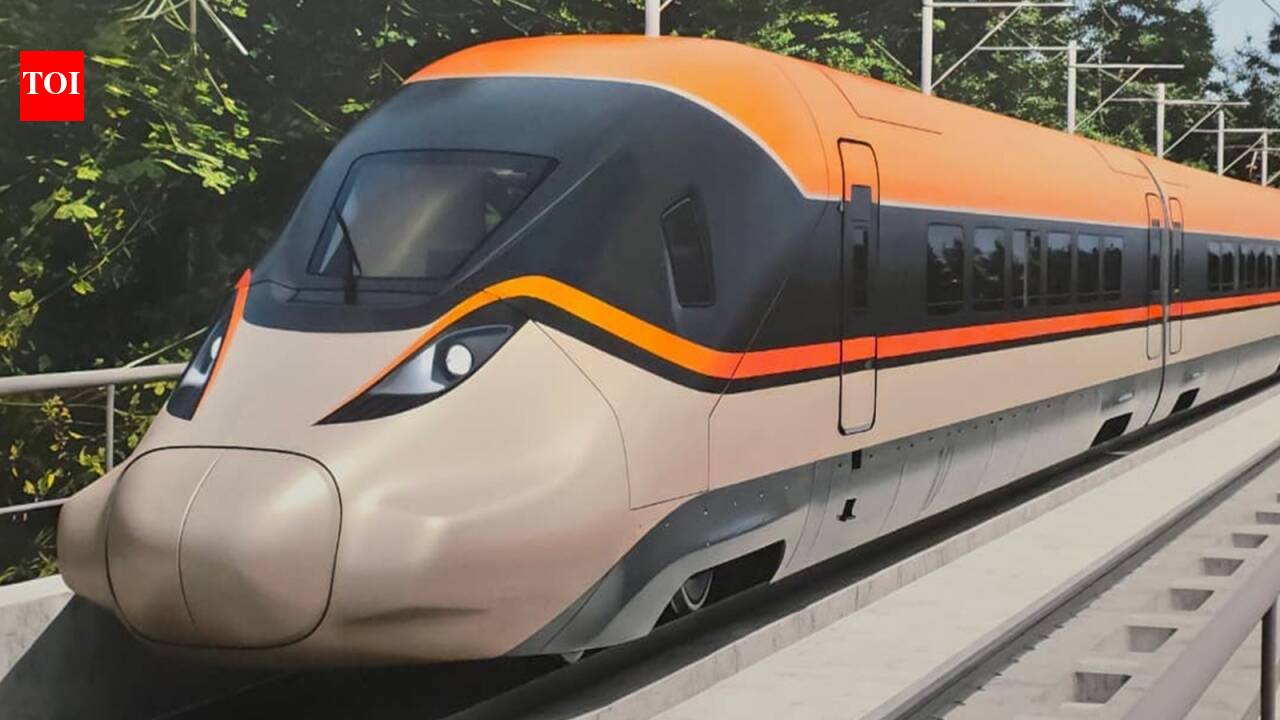
Mumbai-Ahmedabad bullet train corridor: India’s first railway project is likely to begin trial in May 2027, as preparations are underway to test the 50-km Surat-Bilimora stretch of the Mumbai-Ahmedabad high-speed rail tunnel first, Union Railway Minister Ashwini Vaishnaw said on Monday.The Mumbai-Ahmedabad high-speed rail corridor, India’s first rail project, is being developed to establish a high-speed rail link between the two major cities.Speaking at a press conference, Vaishnaw said that the work of installing electricity in this section has been completed, while the work related to signing is scheduled to end in January 2027.The overhead electrification system was energized on November 20, connecting both tracks. This section uses a 2×25 kV transmission system, and installation work at the Bilimora substation has also been completed.
When will India get its first train?
Vaishnaw said the high-speed rail line will start operating in phases, rather than opening its entire length at once.Under the proposed schedule, the Ahmedabad-Vapi section is expected to be completed by the end of 2027. The bullet train service is targeted to extend to Thane by 2029.The first round of tests will use the B-28 train, which is designed to travel at speeds of up to 280 km/h.Vaishnaw explained that trains operating at speeds above 240 kmph require special engineering, as the compressive force generated while the trains are moving must be accounted for in the design of both the stock and the supporting infrastructure.He said the B-28 train had completed a compression test, during which it was at twice the pressure level expected during normal operation. The test is designed to test the train’s ability to withstand high-speed stress-related stresses.The minister also expressed satisfaction with the pace of construction in Maharashtra, including the undersea tunnel project, describing progress in these areas as encouraging.India made bullet train for the first timeBEML Limited has bagged a Rs 866.87 crore contract from Integral Coach Factory (ICF), Chennai, to manufacture two-character prototype train, or high-speed train sets, designed to run at speeds of over 250 km/h. The trains will have a design speed of 280 km/h.The contract covers the design, construction and commissioning of two sets of trains, each with eight coaches.These trains will have fully air-conditioned passenger cars equipped with world-class passenger amenities, state-of-the-art infotainment systems, reclining and adjustable seats, and dedicated divyangjan facilities.To facilitate production, BEML has set up ‘Aditya’ High-Speed Rail Complex in Bengaluru for manufacturing bullet trains.The trains, designated as B-28 train sets, will be built using advanced, precision-driven technology. While bullet trains operating in countries like Japan and across Europe are designed to withstand cold weather conditions, the Indian versions will be designed to deal with the heat and dust of the country.
Many bullet train projects
The Mumbai-Ahmedabad rail corridor is one of the ambitious rail infrastructure projects planned by the Indian Railways. This year’s Union Budget has announced seven more high-speed rail corridors. Developing domestic capacity to manufacture bullet trains can help India meet the continuous stock requirements of these proposed routes in a cost-effective manner.The seven proposed corridors are Mumbai-Pune, with a travel time of 48 minutes; Pune-Hyderabad, 1 hour 55 minutes; Hyderabad-Bengaluru, 2 hours; Hyderabad-Chennai, in 2 hours 55 minutes; Chennai-Bengaluru, in 1 hour 13 minutes; Delhi-Varanasi, in 3 hours 50 minutes; and Varanasi-Siliguri via Patna, in 2 hours 55 minutes.
Source link