Scientists have discovered a previously unknown cleaning system behind the eye, which reveals a hidden passageway that allows fluids and impurities to exit the body’s lymphatic system. The discovery challenges long-held assumptions about how the eye works and could eventually lead to new ways to treat serious conditions that cause blindness.
Glaucoma, age-related macular degeneration, and several other major causes of permanent vision loss are associated with the accumulation of fluid, metabolic waste, and inflammatory material in the back of the eye. Until now, researchers have struggled to explain exactly how this critical region removes unwanted substances.
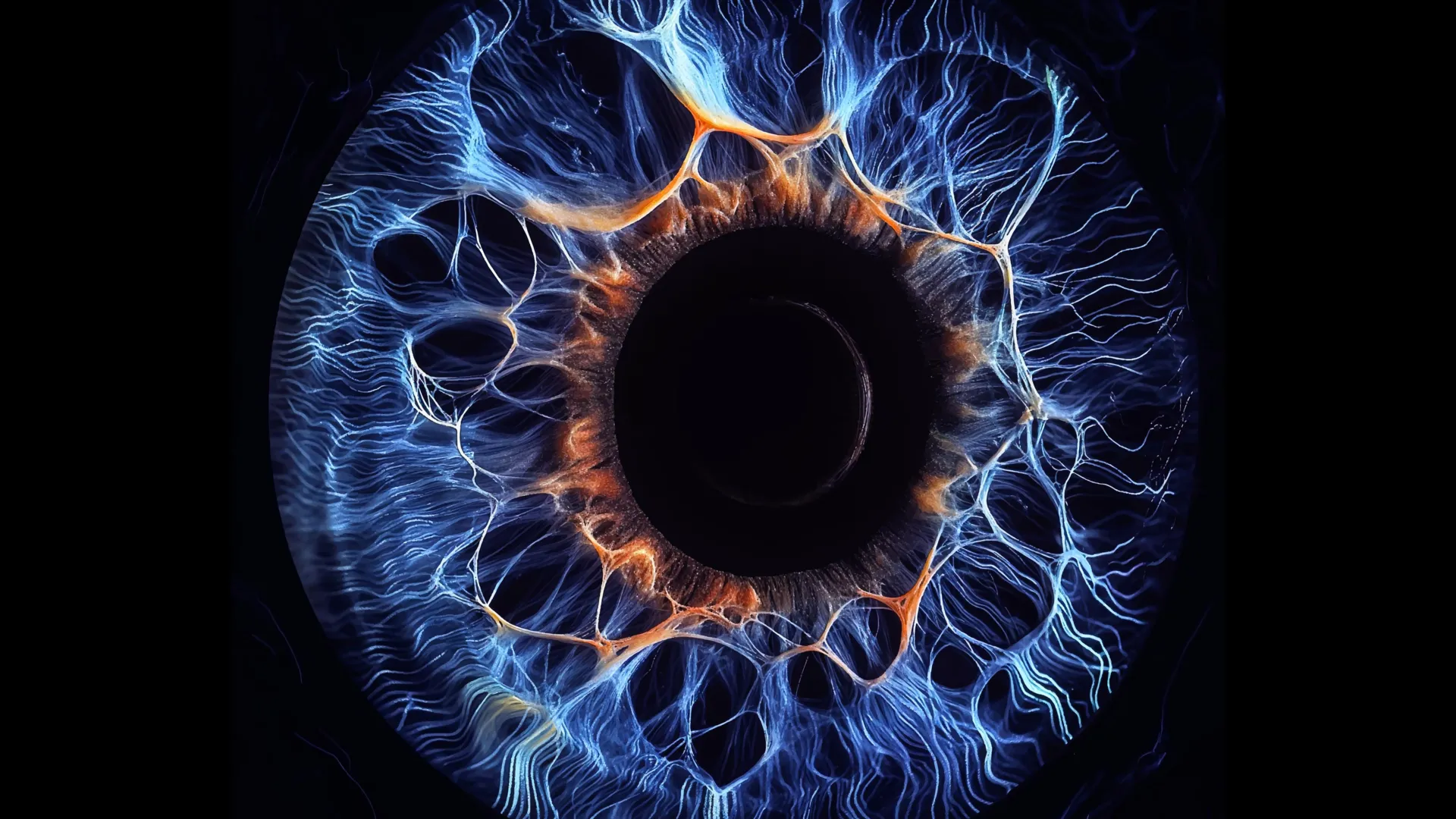
A team from the University of British Columbia (UBC) and the University of Toronto has identified a previously unknown drainage pathway called the posterior ocular lymphatic outflow, or POLO pathway. This system appears to carry fluid and waste from behind the eye and into the lymphatic network, which helps the body retain fluid, remove impurities, and support the immune system.
The findings, shown in mice, give scientists a new way to investigate how the eye protects its soft tissues and what happens when waste removal is disrupted.
“The retina is one of the most active parts of the body in metabolic activity, constantly producing products that need to be repaired,” said Dr. Neeru Gupta, professor and head of the UBC department of Ophthalmology and Visual Sciences. “This discovery helps explain how the eye removes this waste and promises to change the way we think about and treat a range of eye conditions.”
The Hidden Eye Clearing System may open up new avenues of treatment
The retina, the light-sensitive tissue at the back of the eye, needs a lot of energy to convert incoming light into signals that the brain can interpret. This continuous activity produces metabolic byproducts that must be removed to keep the surrounding tissues functioning properly.
When fluid and debris accumulate, it can contribute to conditions that damage the eye. Glaucoma, macular degeneration, and other retinal disorders are associated with changes in fluid regulation, accumulation of cellular debris, tissue stress, and inflammation.
Age-related macular degeneration alone affects approximately 2.5 million Canadians, highlighting the potential importance of understanding the mechanisms that keep the retina healthy.
The newly identified POLO pathway suggests that the back of the eye has a natural way of removing unwanted material from this vulnerable area. If scientists can determine how that process works and whether it can be strengthened, it could provide new targets for treatments designed to protect vision.
“This gives us a whole new framework for understanding these diseases and potential treatment targets,” said Dr. Gupta. “The question now is: How can we improve or use this cleaning system to treat or prevent disease.”
A Discovery That Challenges Over a Century of Assumptions
For more than a century, scientists generally believed that the eye lacked the lymphatic drainage systems found in almost all other organs.
The lymphatic system consists of vessels and tissues that collect large amounts of fluid, transport certain waste products, and help coordinate immune responses. It works alongside the circulatory system to maintain healthy conditions throughout the body.
The idea that the eye was very different from this array began to change in 2009, when Dr. Gupta and Dr.
They named it “uveolymphatic”, providing evidence that the eye had a previously unknown connection to the body’s fluid removal mechanisms.
Dr. Yücel, professor and director of ophthalmology at the University of Toronto, went on to investigate whether similar mechanisms might exist elsewhere in the eye.
Despite those early findings, the back of the eye remained unexplored. This was a very important gap because the retina and surrounding tissues are affected by some of the most serious diseases that cause permanent vision loss.
“The retina is responsible for vision and this is where many of the most dangerous diseases of vision loss occur,” said Dr. Yücel. “Understanding how this part of the eye maintains a balanced environment and flow is important.”
Scientists Track Secret Cleanup Pathway Behind the Retina
To investigate how fluid leaves behind the eye, researchers combined several advanced imaging methods in mice, including magnetic resonance imaging (MRI), near-infrared fluorescence imaging, and microscopic examination.
They put fluorescent tracer atoms in a small area behind the eye. Because these molecules could be seen as they moved, scientists were able to follow the path of the liquid and find out where it was going.
The results revealed small lymphatic vessels in the choroid, the thin, blood-tight layer beneath the retina. The choroid plays an important role in feeding the outer retina, but lymphatic vessels had not previously been established in this region.
The team saw fluid from the back of the eye seeping into the surrounding tissue, which takes up space around the eyeball. Within a few minutes, these tracers reach the nearby lymph nodes, connecting the eye’s newly discovered drainage system to the extensive lymphatic system.
This provided evidence that fluid from the back of the eye can enter the active drainage system rather than remaining trapped within the eye.
“Because lymphatic vessels in the choroid were thought to be absent, this group used multiple techniques to demonstrate both their presence and function,” added Dr. Yücel, pathologist and scientist at St. “We were surprised to see such a direct route for fluid to leave the eye and connect to the lymphatic system. It suggests that the back of the eye has an active clearing pathway, which can play an important role in removing fluid, proteins and inflammatory substances that build up in diseases.”
Can an Eye Cleansing Program Help Prevent Blindness?
Although the discovery provides a new explanation for what fluids and debris may leave behind, important questions remain.
Experiments were conducted on mice, and further studies are needed to determine how well the POLO method works in humans. Researchers also need to determine whether changes in this drainage system contribute to eye disease and whether its function can be safely altered.
If those questions can be answered, the method may offer several treatment options.
Another approach may involve developing therapies that improve fluid excretion, which may reduce the accumulation of factors associated with inflammation and tissue damage. Another possibility is to use the knowledge of this drainage system to improve the way drugs are delivered to the deeper structures inside the eye.
Understanding the system may also help researchers investigate how stress, inflammation, and fluid movement interact in conditions such as glaucoma and age-related macular degeneration.
These applications remain a potential future development over established therapies. Nevertheless, the discovery provides scientists with a new approach to anatomical research and a possible explanation for processes that have remained poorly understood for decades.
“This is the foundation that has been discovered that shows that the eye is not a closed system as we thought before,” said Dr. Gupta. “It gives us a new map, a new approach and a new set of questions to explore.”
The findings were published in a scientific journal A Perspective on Interpreting Science and Technology.
This research was supported by the Canadian Institutes of Health Research, Glaucoma Research Society of Canada, Henry Farrugia Ophthalmology Research Fund, Canadian Space Agency, Dorothy Pitts Chair, Stephen M. Drance Chair, Thor and Nicky Eaton Research Fund, and the Canada Foundation for Innovation Leaders Opportunity Fund.
Source link