UC San Diego biologists have identified a genetic mutation that gave butterflies an extra light-sensing cell in their eyes, increasing their color vision beyond imagination.

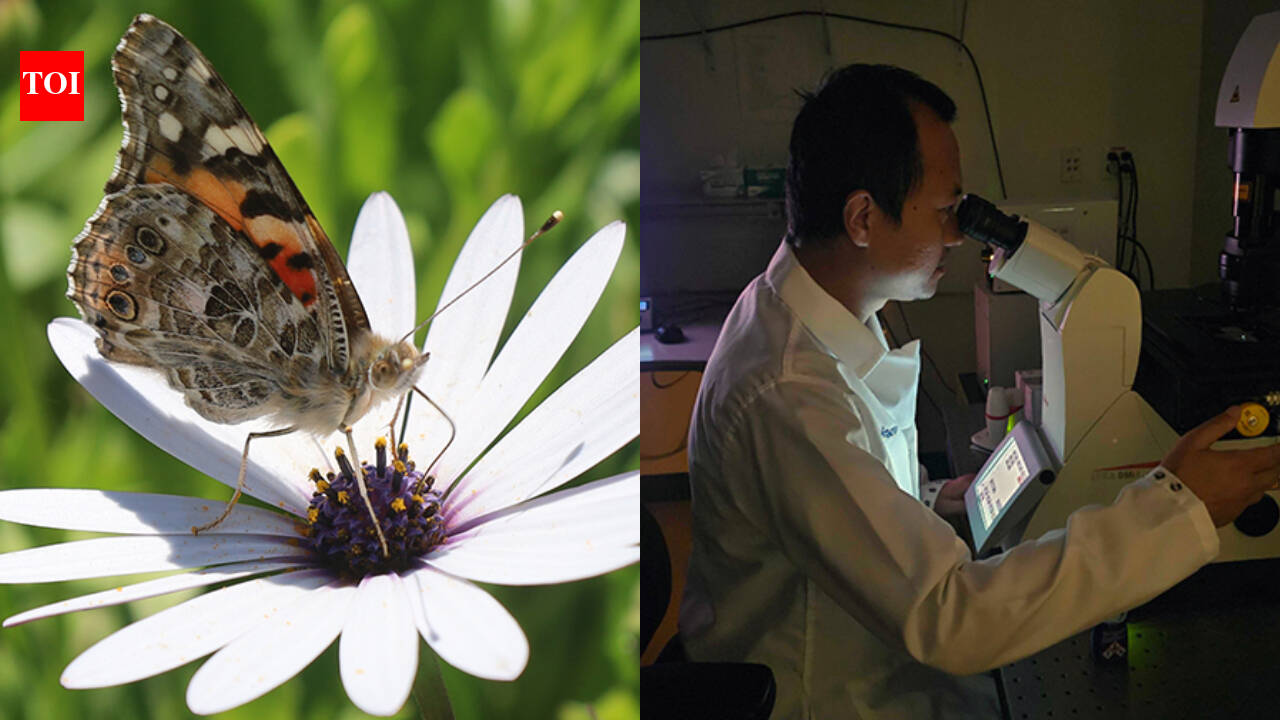
The butterfly world is not just brighter or more colorful than ours. It is built from a rich visual vocabulary, shaped by evolutionary tweaks hidden deep within its compound eyes. While most insects have spent hundreds of millions of years working on a common visual blueprint, butterflies took a different route, adding a light-sensing cell to every small visual unit. Now, researchers at the University of California at San Diego have identified the genetic mutation that made this unusual development possible.
The eye that broke the mold
According to the UC San Diego website, compound eyes are made up of hundreds of tiny units, each containing a cluster of photoreceptors that detect light. In many insects, including flies, each unit has eight such cells, arranged in a remarkably conserved way. Butterflies are different. Their eye units contain nine photoreceptors, which give them access to a wide range of color information. The benefit can be especially useful when you’re wandering around flowering plants, getting nectar and finding potential mates.Scientists in Michael Perry’s lab at the UC San Diego School of Biological Sciences traced these differences to a specific genetic mutation.Their research, published in Science Advances, focused on painted lady butterflies, one of the most widespread butterfly species in the world. The researchers found that the butterflies did not reorganize their entire visual system. Instead, they effectively copied one part of the existing system, adding a second R7 photoreceptor to each eye unit.
Re-creating the butterfly eye
The discovery was even more surprising when the researchers tested whether this genetic mutation alone could produce more cells. They introduced the appropriate genetic mutation into fruit flies, turning on the gene in cells where it is normally turned off and doing so during the short developmental window when the eye develops, the report added.The result was a fruit fly whose individual units developed nine photoreceptors instead of the normal eight, following what the researchers describe as a butterfly-like system.But creating an extra light detector raised another evolutionary puzzle. A new nerve cell needs a specific location to send its information. If the eye had received an additional photoreceptor, surely the brain would need to develop new neural connections to process its signals.
The brain is already waiting
The researchers discovered that the fly’s brain was already producing more neurons than it eventually needed. Cells that fail to establish useful connections often disappear during development. When experimental flies develop an additional photoreceptor, some of these residual neurons are recruited to communicate with it. They survived and developed the right genes without needing another new genetic method.The findings suggest that evolution can sometimes use biological adaptations that already exist rather than creating an entirely new system from scratch.
Evolution in the making
The researchers also identified the hawkmoth as showing what could be an intermediate stage in the same evolutionary transition. The lower part of its eye contains two R7-like cells in each unit, similar to the arrangement of a butterfly, while the upper part maintains the typical single-cell configuration of flies. That uneven pattern can provide clues as to how such apparent change spreads through the eye during evolution.The next question is whether the extra photoreceptor gives the engineered flies the rich color vision associated with butterflies. An experiment that could reveal whether adding a single nerve cell is enough to change the way an animal senses its surroundings.For now, the discovery offers a rare look at evolution working with an existing toolkit: one genetic switch, one extra nerve cell and a brain that’s wonderfully tuned to use it.Images via Coursesy: UC San Diego website
Source link